 Rural Home Compass
WV homeowner guide
West Virginia: private well + septic
West Virginia routes private-well construction, modification, abandonment, sampling requests, and records through local health departments while the state certifies drillers and laboratories and publishes an initial chemistry-and-microbiology testing group.
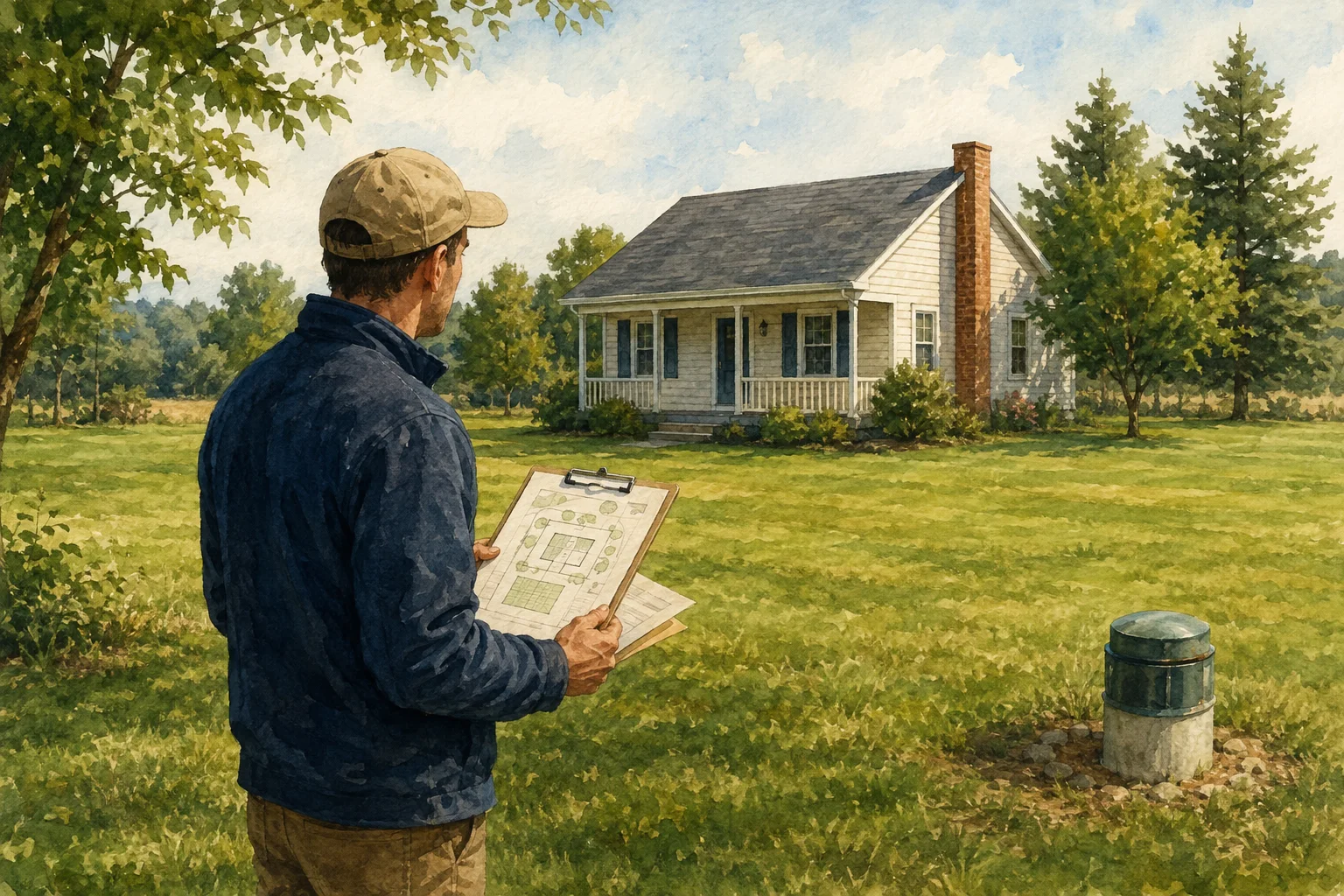
West Virginia-specific value comes from its county permit and certified-driller pathway, state laboratory initial test group, local-sanitarian sampling route, dynamic PFAS and fluoride guidance, and county-centered records model.
A local-health permit and certified driller are required for constructing, modifying, or abandoning an individual well. Routine water-quality testing is owner-directed, with state laboratory guidance identifying total coliform, regulated metals, and combined nitrate plus nitrite as an initial group.
West Virginia regulates individual onsite sewage through state standards and local health departments; in the absence of a property-specific interval, EPA’s one-to-three-year inspection and three-to-five-year pumping ranges are conservative planning guidance rather than a state permit rule.
Local health departments issue individual-well permits and coordinate bacteriological sampling; the West Virginia Department of Health sets well rules and certifies drillers; the Office of Laboratory Services and certified laboratories handle water analyses.
Request the SW-256 permit and SW-258 completion report from the local health department that issued the well permit; older or incomplete location data may require the owner, driller, road, and county rather than a map point.
Private well testing overview
West Virginia uses different testing paths for different moments.
New-well completion, routine ownership, a home purchase, and a flood or repair are not the same testing decision. Use the dedicated guide for the exact timing, required parameters, laboratory route, and county records to request.
Open the West Virginia private-well testing guide →Septic facts that change your next step
- West Virginia onsite-sewage permits and property files are handled through local health departments under state standards.
- EPA’s one-to-three-year inspection and three-to-five-year pumping ranges are planning fallbacks, not a West Virginia permit condition.
- Alternative systems, pumps, permit terms, measured solids, occupancy, and current condition can require a different maintenance schedule.
- Contact the local health department for the permit, records, sampling route, and property-specific requirements.
- Verify the driller and laboratory certification before work or sample collection.
- Establish the state initial testing group, then add contaminants only from credible site, event, or household evidence.
Official state sources
- West Virginia Office of Environmental Health Services: Individual Water SuppliesReviewed 2026-09-14
- West Virginia Office of Environmental Health Services: Certification and Training for Well Drillers and Pump InstallersReviewed 2026-09-14
- West Virginia Bureau for Public Health: Water Well Forms and Completion ReportsReviewed 2026-09-14
- West Virginia Office of Environmental Health Services: Public Health Sanitation Rules for Water WellsReviewed 2026-09-14
- West Virginia Office of Laboratory Services: Environmental Chemistry for Private Well OwnersReviewed 2026-09-14
- West Virginia Office of Laboratory Services: Environmental Microbiology and Private Well SamplingReviewed 2026-09-14
- West Virginia Office of Environmental Health Services: Water Quality Laboratories Certified in West VirginiaReviewed 2026-09-14
- West Virginia Office of Laboratory Services: Drinking Water Laboratory Certification ProgramReviewed 2026-09-14
- West Virginia Office of Environmental Health Services: Environmental Health Procedures Manual and Private Well DisinfectionReviewed 2026-09-14
- West Virginia Department of Environmental Protection: PFAS and Private Well TestingReviewed 2026-09-14
- West Virginia Oral Health Program: Free Water Testing for Private SystemsReviewed 2026-09-14
- West Virginia Department of Environmental Protection: West Virginia Water Resources Management PlanReviewed 2026-09-14
- U.S. Environmental Protection Agency: Frequent Questions on Septic SystemsReviewed 2026-09-14
- U.S. Centers for Disease Control and Prevention: Guidelines for Testing Well WaterReviewed 2026-09-14