 Rural Home Compass
OH homeowner guide
Ohio: private well + septic
Ohio puts the local board of health at the center of private-water construction, alteration, inspection, and sampling. Ordinary one-, two-, and three-family homes are not covered by the state rule’s annual sampling mandate for other private systems, so routine homeowner testing must be separated from regulated work.
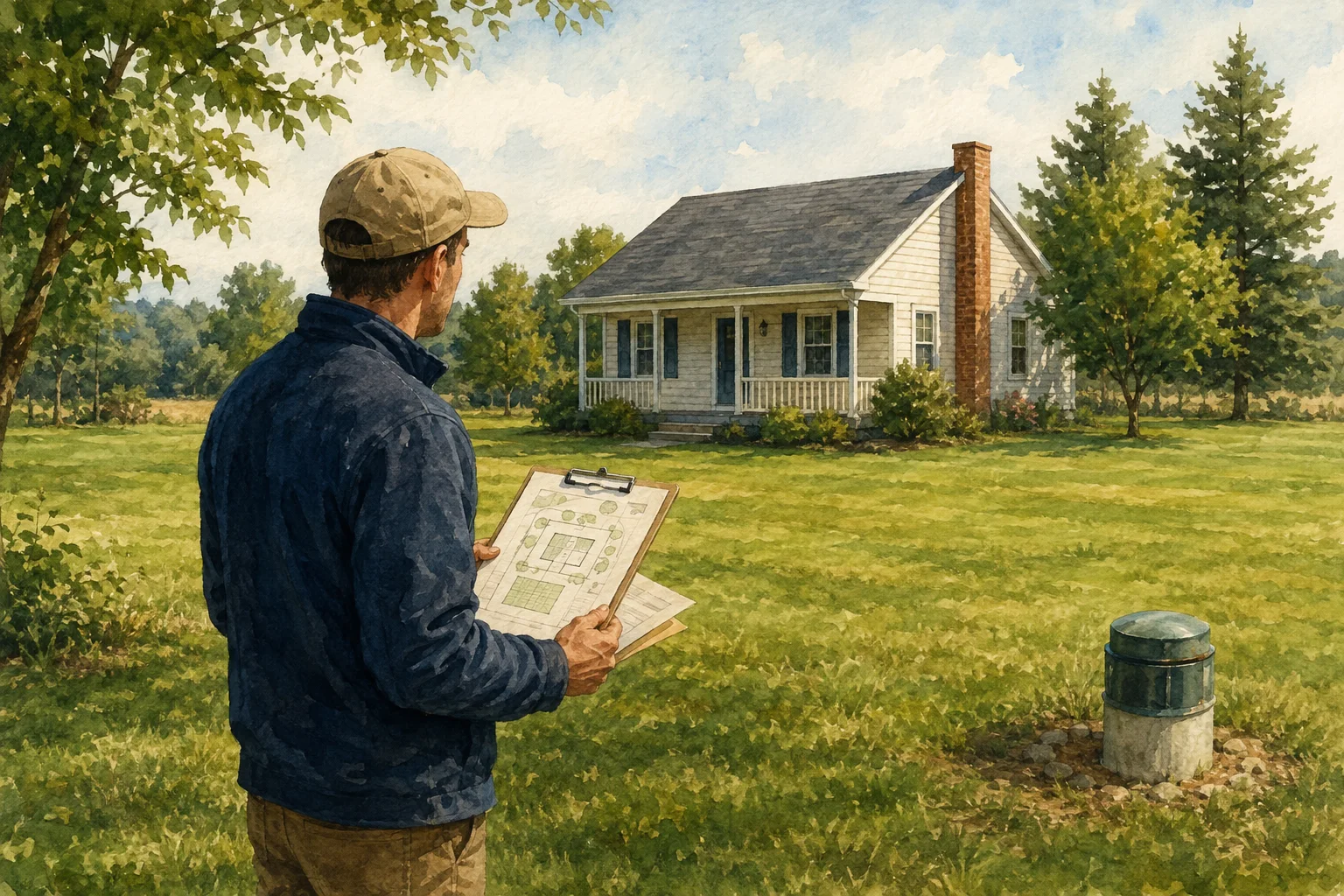
Ohio-specific value comes from its board-of-health approval sample, the explicit ordinary-home exception to the annual rule, and the documented limits of map-only well-record searches.
New or regulated private-water work has a state-defined inspection and sampling path; routine household testing is owner-directed and should follow current health guidance plus local risks.
Household sewage systems must follow their installation or operation permit, manufacturer instructions, and local board-of-health operation-and-maintenance tracking rather than one statewide pumping date.
City and general health-district boards administer Ohio private-water and household sewage rules, set local procedures and fees, and hold property-specific permits and inspection records.
Search the ODNR Water Well Database for the construction log, then request private-water permits, samples, approvals, and sewage records from the local board of health.
Private well testing overview
Ohio uses different testing paths for different moments.
New-well completion, routine ownership, a home purchase, and a flood or repair are not the same testing decision. Use the dedicated guide for the exact timing, required parameters, laboratory route, and county records to request.
Open the Ohio private-well testing guide →Septic facts that change your next step
- Ohio household sewage systems must remain in proper working condition and comply with their installation or operation permit.
- Local boards of health track inspections, maintenance, service contracts, pumping receipts, and permit conditions where applicable.
- Installers, septage haulers, and service providers generally register with the board of health for each jurisdiction where they work.
- Search ODNR for the well log using both address and non-map tools.
- Request private-water and sewage permits, samples, approvals, and service records from the local board of health.
- Separate the required post-work sample from the voluntary routine household testing calendar.
Official state sources
- Ohio Laws and Administrative Rules: Chapter 3701-28: Private Water SystemsReviewed 2026-09-13
- Ohio Laws and Administrative Rules: Rule 3701-28-04: Inspection, sample collection, analysis, and standardsReviewed 2026-09-13
- Ohio Revised Code: Section 3701.344: Rules for private water systemsReviewed 2026-09-13
- Ohio Department of Natural Resources: Ohio Water Well DatabaseReviewed 2026-09-13
- Ohio Department of Natural Resources: Ohio water-well map layer description and coverage limitsReviewed 2026-09-13
- U.S. Environmental Protection Agency: Protect Your Home's WaterReviewed 2026-09-13
- U.S. Centers for Disease Control and Prevention: Guidelines for Testing Well WaterReviewed 2026-09-13
- Ohio Laws and Administrative Rules: Chapter 3701-29: Sewage Treatment SystemsReviewed 2026-09-13