Rural Home Compass
Water staining
Orange stains from well water: test before choosing treatment
Orange or rust-colored staining is an observation, not a laboratory diagnosis: color alone cannot establish iron concentration, a specific contaminant or drinking-water safety. RHC planning advice: record where and when stains appear, then use suitable laboratory testing to inform the next step. Do not select treatment solely from stain color.
Start here
The short version
- Ask a certified laboratory about iron, manganese, pH, and other locally relevant chemistry instead of identifying the cause from color alone.
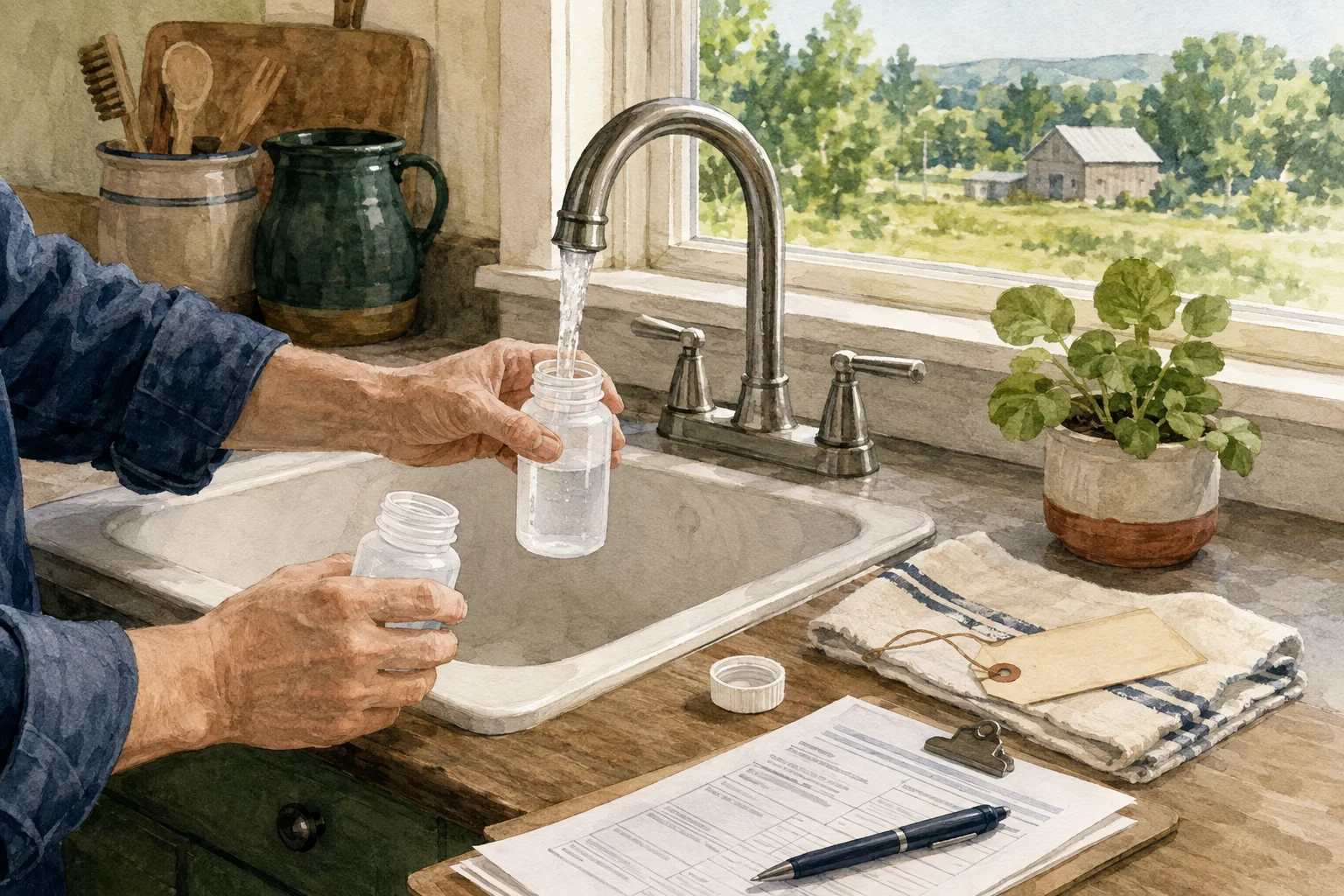
- Sample untreated water when the decision concerns source-water treatment, and record exactly where the sample was collected.
- Compare equipment only after concentration, peak flow, backwash discharge, pressure loss, and maintenance needs are known.
Use stain color as a testing trigger
EPA lists iron, copper and manganese as testing considerations for stained fixtures or laundry. UGA Extension associates red/brown staining with iron, but explains that appearance cannot establish whether water is safe or unsafe; clear-looking water is not proof of safety either. Iron is a possible explanation, not a confirmed concentration. RHC observation prompts: note which fixtures or laundry stain, hot versus cold water, when staining began and any recent plumbing or treatment changes. These details help discuss possible source-water, sediment or plumbing contributions—not diagnose them.
Build a result that can support treatment design
Use a drinking-water laboratory certified for the relevant analyses. EPA describes reports as concentrations of tested substances; UGA notes that no single test covers every contaminant and recommends expert help choosing tests. RHC planning prompts: discuss iron, manganese, pH and locally relevant additions with the laboratory based on the observations and possible sources, rather than treat this as a mandatory panel. Check what the report actually tested and whether the sample was taken before or after treatment. For a source-water treatment decision, a treated-water result alone does not describe the untreated water; confirm the appropriate sample location and instructions with the laboratory. Other concerning results need their own follow-up, not just stain removal.
Calculate the operating fit, not just the purchase price
RHC treatment-selection prompts—not an EPA equipment formula or official requirements: ask the supplier which laboratory results and sample location support the proposal, and which concentration and flow it is designed for. Retain questions about pressure loss, backwash flow and discharge, media or chemical consumption, service interval and power outages. Confirm whether the proposal addresses other relevant results separately. Stain color alone cannot specify a filter, capacity, performance or cost; measured water and actual demand may lead to different proposals.
Understand the evidence
What these tests can—and cannot—tell you.
Iron and manganese
Use this record to replace stain-color guessing with measured concentrations before comparing treatment equipment.
The iron and manganese concentrations in the submitted sample.
Cannot tell youThat every orange or black stain comes from source-water iron or manganese.
Sources and review record
- US EPA: Protect Your Home's WaterReviewed 2026-09-05
- University of Georgia Cooperative Extension: Testing for Water QualityReviewed 2026-09-05
Keep getting to know your home