Rural Home Compass
Routine well care
Annual well water testing: a practical checklist
A clear glass of water is not a test result. Build an annual baseline, then add tests when local conditions or changes around the well justify them.
Start here
The short version
- The agency annual baseline covers total coliform bacteria, nitrate, pH, and total dissolved solids; discuss additional analyses with the laboratory.
- Use a state-certified drinking-water laboratory.
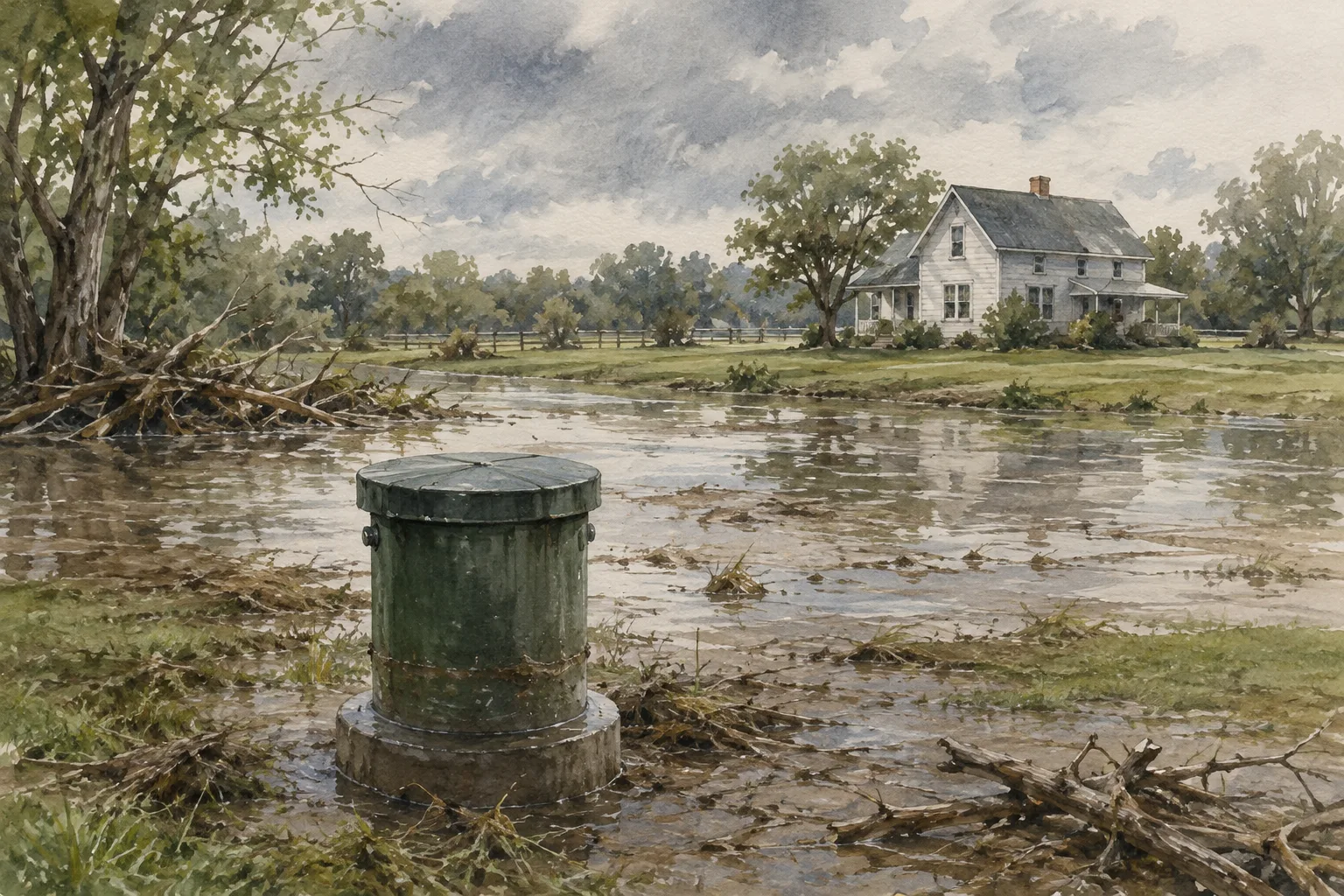
- Test again after flooding, well work, nearby land disturbance, or a change in taste, odor, or color.
The annual baseline
EPA and CDC describe an annual baseline. Our planner also includes E. coli and nitrite as related discussion items, not as a claim that these are universal annual requirements. Keep reports comparable by retaining their analytes, units, sample locations and dates.
- Total coliform bacteria
- Nitrate
- pH
- Total dissolved solids
When the baseline is not enough
The useful panel depends on geology, nearby activity, plumbing, and household vulnerability. A local health department or certified laboratory can help select additional analytes.
- Add VOC testing for a credible fuel, solvent, landfill, or dry-cleaning concern.
- Consider pesticides and nitrate where intensive agriculture is nearby.
- Add lead and copper when plumbing or service-line materials are a concern.
- Treat changes in odor, taste, color, or turbidity as reasons to test—not as diagnoses.
Make the result actionable
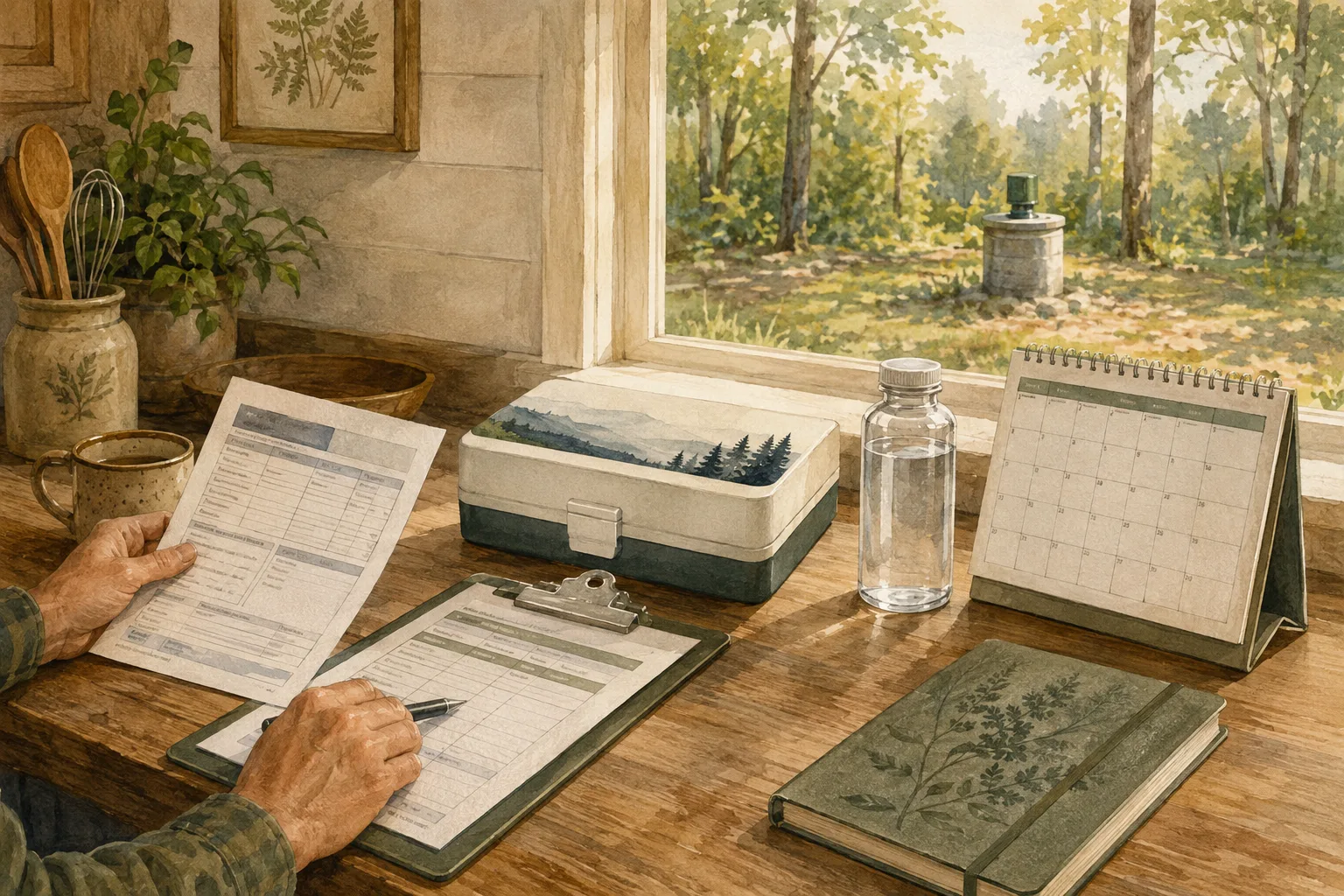
Record the sample location, date, laboratory, analytes, units, and any benchmark shown. If a contaminant exceeds a health benchmark, contact the local health department and confirm the result before choosing treatment.
A checklist you can use
From “test the well” to a clear next step.
The planner starts with these shared records. It includes E. coli and nitrite as discussion items alongside the agency baseline; it does not claim that every listed analysis is a universal annual requirement.
pH and total dissolved solids
pH · total dissolved solids
What changed since the last report?
A calendar reminder is only one starting point. Choose an example to see how the same rules respond.
These examples are not an exhaustive screening questionnaire. For illness, fuel-like odor or other urgent concerns, use the full safety-first tool and local guidance rather than a routine shopping comparison.
Prepare the conversation
Your testing checklist
Planning sequence by the editorial desk. Agency guidance: CDC well-water testing and EPA private wells, checked September 6, 2026 local time. Follow the laboratory's sampling instructions; this checklist is not a collection protocol.
Keep the next step connected
Build the panel. Then compare the coverage.
Start with your actual context. The tool will show the tests selected and any safety stop.
Sources and review record
- US EPA: Protect Your Home's WaterReviewed 2026-09-05
- CDC: Guidelines for Testing Well WaterReviewed 2026-09-05
Keep getting to know your home