Nitrate and nitrite are laboratory measurements that matter especially for households with infants and for wells near agriculture, septic systems, runoff, or other nitrogen sources. The result reflects the submitted sample, not a diagnosis of the source.
Reviewed 2026-09-05Rural Home Compass editorial deskData record nitrate-nitrite
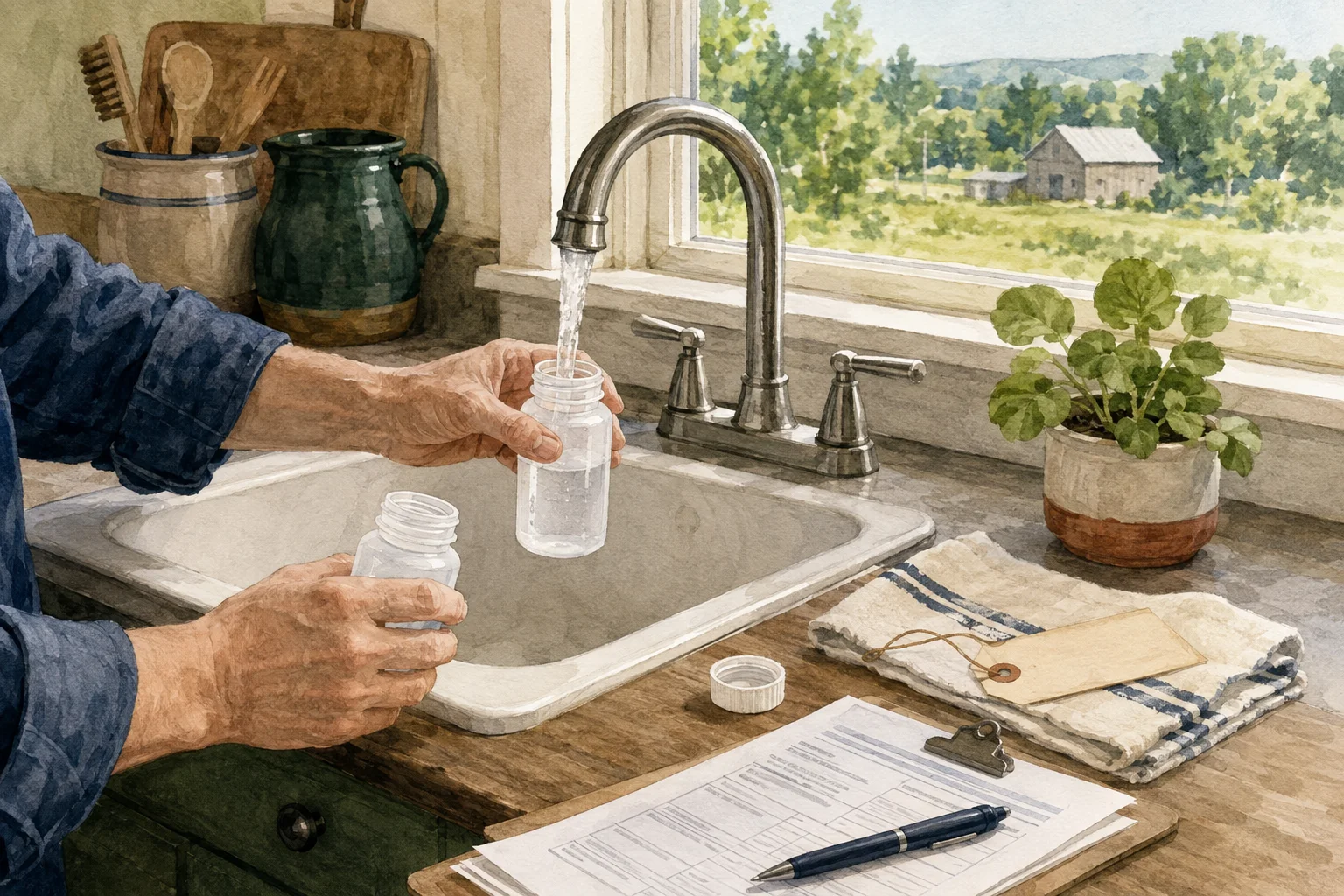
The analyte, certified method, sample location, container, handling, and date are part of the result—not just the number on the report.Laboratory analyses in this record
nitrate
nitrite
Why this appears in a test plan
Use this record for the recurring private-well baseline and when household vulnerability or nearby land use makes a current result more important.
baseline: CDC includes nitrate in the recurring baseline for private wells.
agriculture: Nearby manure, fertilizer, livestock, and agricultural activity can make nitrate and related local testing more relevant.
vulnerable household: Pregnancy and an infant in the household justify added caution and a current nitrate result.
new property: A current nitrate result helps replace unknown water-quality history at a newly purchased home.
What the result can tell you
The measured nitrate and nitrite concentrations in the submitted water sample.
Whether the reported result is above the comparison value used by the laboratory or local authority.
What it cannot prove
Which nearby activity or natural condition caused the measured concentration.
That nitrate will remain unchanged through another season, storm, or change in land use.
Use the result safely
Use a state-certified laboratory and confirm whether it reports nitrate, nitrite, or a combined value before comparing results.
If the result is elevated, use a verified safe alternate source and contact the local health department for household-specific guidance.
This page and the recommender read from the same structured record. Sources were checked on 2026-09-05; local instructions override this national explanation.
 Rural Home Compass