Rural Home Compass
Urgent water safety
Well water after flooding: what to do first
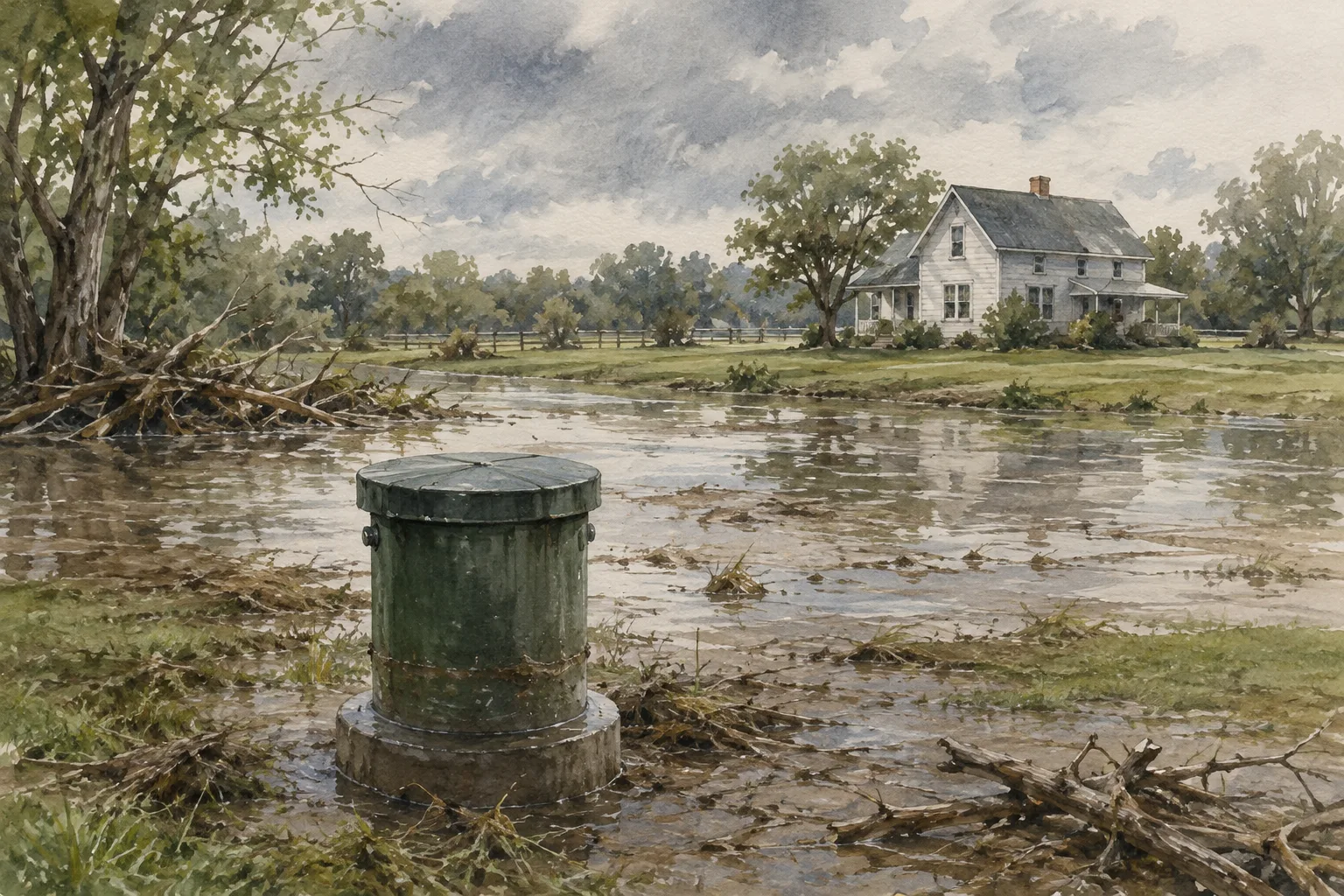
Floodwater can carry microbes and chemicals into a well. Until the well is assessed and the water is tested, use a verified safe alternate source for drinking, cooking, brushing teeth, and making ice.
Start here
The short version
- Stay away from wet electrical equipment and do not energize a flooded pump system.
- Inspect for visible damage from a safe location and contact a qualified well contractor when needed.
- Follow local health-department instructions for disinfection, flushing, sampling, and return to use.
While floodwater is present
Do not drink from a well that may have been flooded. Keep people away from damaged wiring, well pits, standing water, and sewage. If the septic area is flooded, reduce or stop wastewater use as local officials advise.
After water recedes
A qualified professional may need to inspect the well, pump, wiring, cap, casing, and nearby ground before the system is restarted. Do not assume household disinfection alone repairs structural damage.
Testing and return to use
Contact the local health department or a certified drinking-water laboratory for the correct sampling sequence. Microbial testing is commonly central after flooding, while chemical testing depends on nearby spills, fuel, agriculture, or industrial sources.
Sources and review record
- US EPA: Protect Your Home's WaterReviewed 2026-09-05
- CDC: Guidelines for Testing Well WaterReviewed 2026-09-05
Keep getting to know your home