Rural Home Compass
Urgent septic problem
Wet or unusually green septic drainfield: treat it as a warning
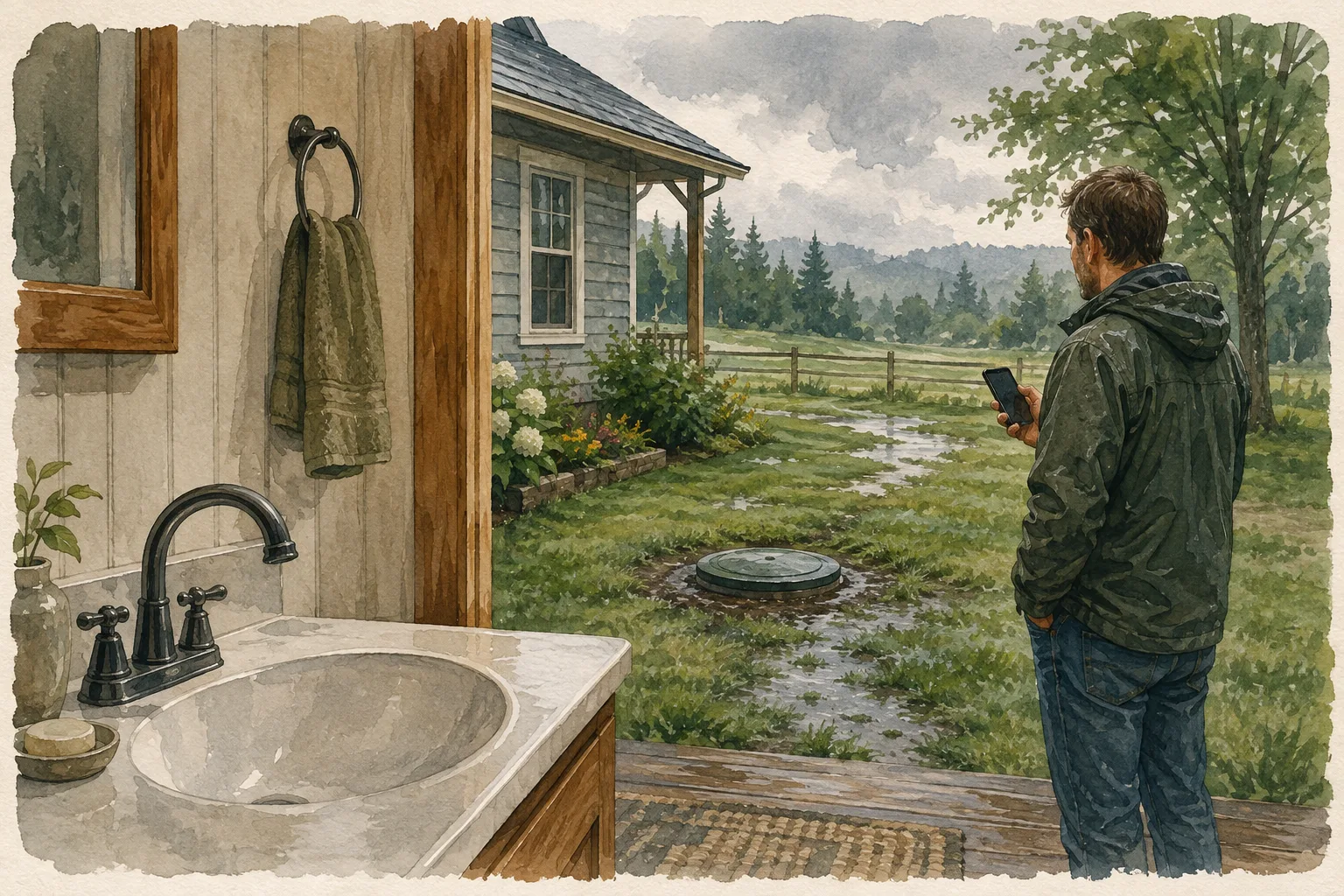
Persistently wet, spongy, ponded, or unusually green ground over a septic tank or drainfield—especially during otherwise dry weather—can indicate surfacing wastewater or system malfunction. Reduce wastewater loading, keep people and pets away, and arrange prompt professional evaluation.
Start here
The short version
- Do not walk through, mow, dig, probe, drive over, or open components in a wet septic area.
- Stop or sharply reduce laundry, showers, dishwashing, irrigation, and other nonessential water use while the condition is assessed.
- Recent heavy rain changes the context, but persistent wetness, odor, backup, or visible effluent still needs professional evaluation.
Assume exposure until the liquid is identified
EPA lists standing water, damp spots, sewage odor, and bright green or spongy grass over a tank or drainfield among common failure signs. Keep children and pets away and avoid contact. Do not inspect by opening a tank or walking across unstable, saturated ground.
Reduce the load without pretending to repair it
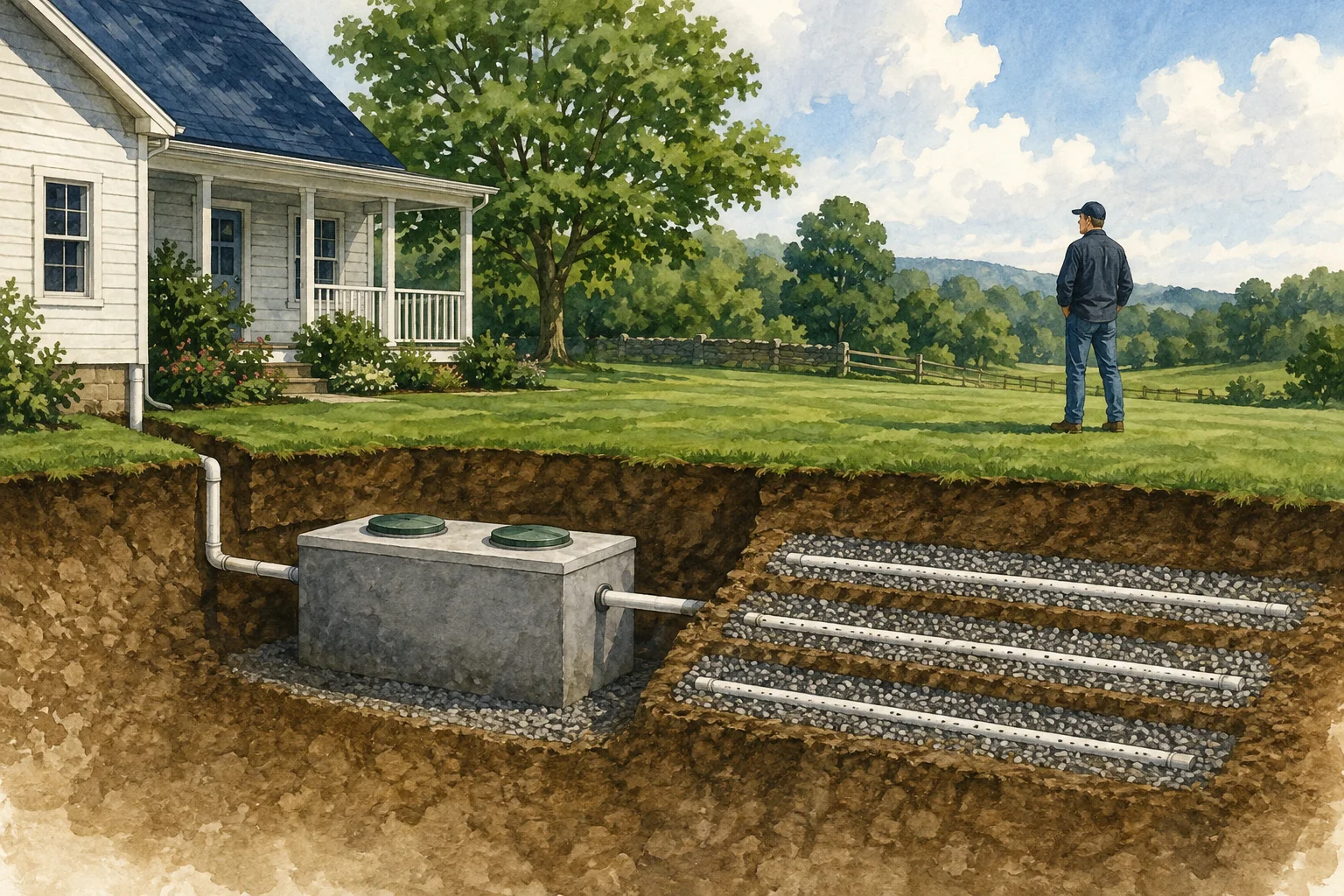
Pause nonessential water use so the home sends less wastewater toward the system. Do not route sump pumps, roof drainage, or other clear water toward the drainfield. Pumping may create temporary tank capacity, but it does not prove that piping, distribution, soil treatment, a pump, or the drainfield is functioning.
Give the professional the event timeline
Record recent rainfall, household occupancy, laundry and guest loads, alarms, backup, odors, service dates, and how long the area has stayed wet. The inspection should distinguish weather saturation from a hydraulic, component, distribution, or drainfield problem and identify the locally required repair path.
Understand the planning factors
What changes your next maintenance step.
Unusually green drainfield without visible wetness
EPA lists bright green, spongy, lush grass over the tank or drainfield—especially during dry weather—among signs that deserve septic-system evaluation.
Sets at least a due soon result.
BoundaryThe rule selects a service branch; it does not diagnose a failed component.
Standing water, wet soil, or surfacing wastewater
Surfacing wastewater or persistently wet ground over the drainfield can indicate malfunction and creates an exposure concern.
Sets at least a urgent result.
BoundaryThe rule selects a service branch; it does not diagnose a failed component.
Sources and review record
- US EPA: Frequent Questions on Septic SystemsReviewed 2026-09-05
- US EPA: Resolving Septic System MalfunctionsReviewed 2026-09-05
Keep getting to know your home