Rural Home Compass
Septic weather
Septic trouble after heavy rain: reduce flow before guessing
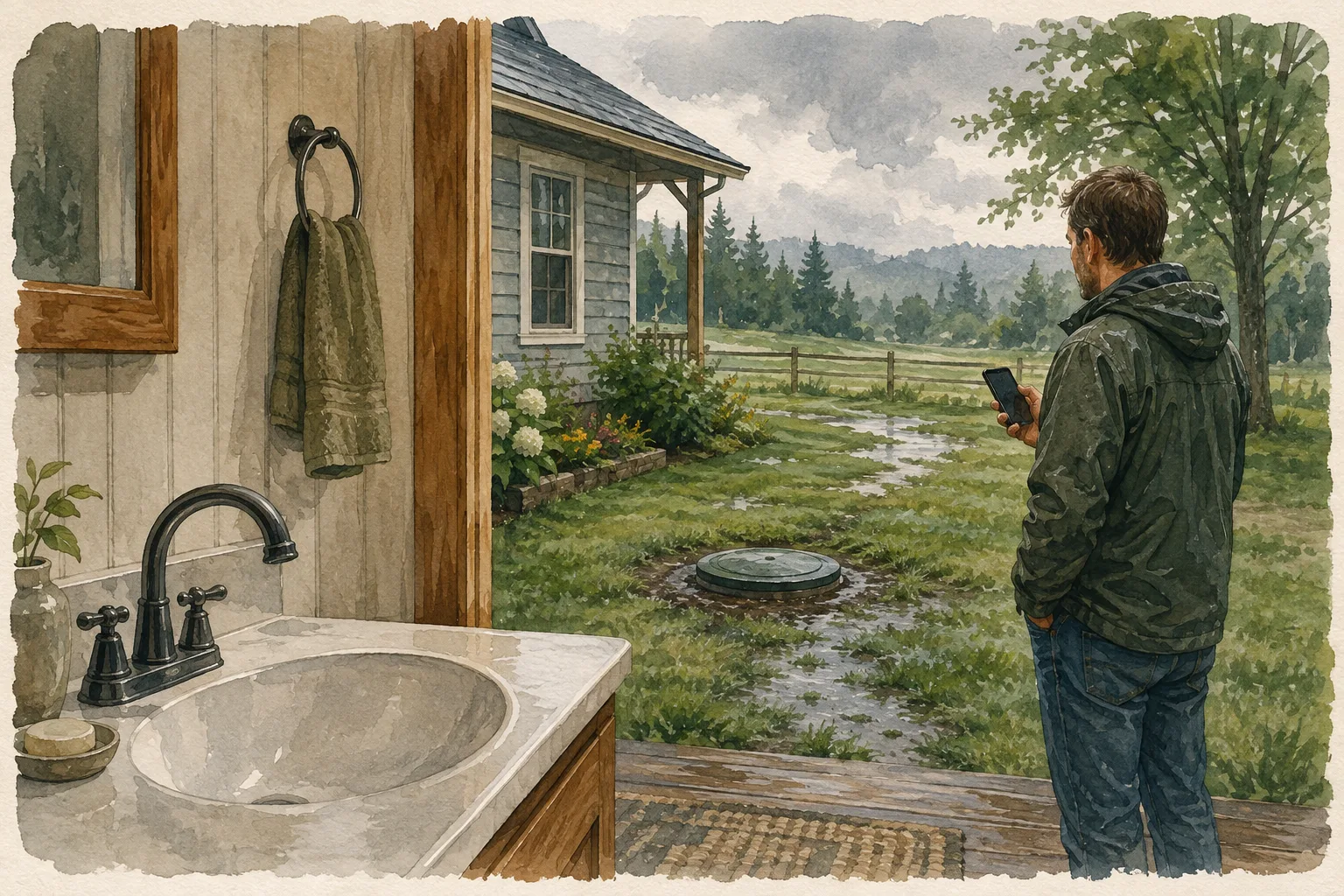
Heavy rain can saturate the soil around a drainfield and reduce the system’s ability to accept and treat wastewater. The immediate homeowner action is to lower water use and watch for exposure signs—not automatically order pumping.
Start here
The short version
- Reduce showers, laundry, dishwashing, and other wastewater loads while the drainfield is saturated.
- Do not drive, dig, or operate heavy equipment over wet tank or drainfield areas.
- Sewage backup, surfacing wastewater, electrical damage, or persistent failure needs prompt local professional help.
What rain changes
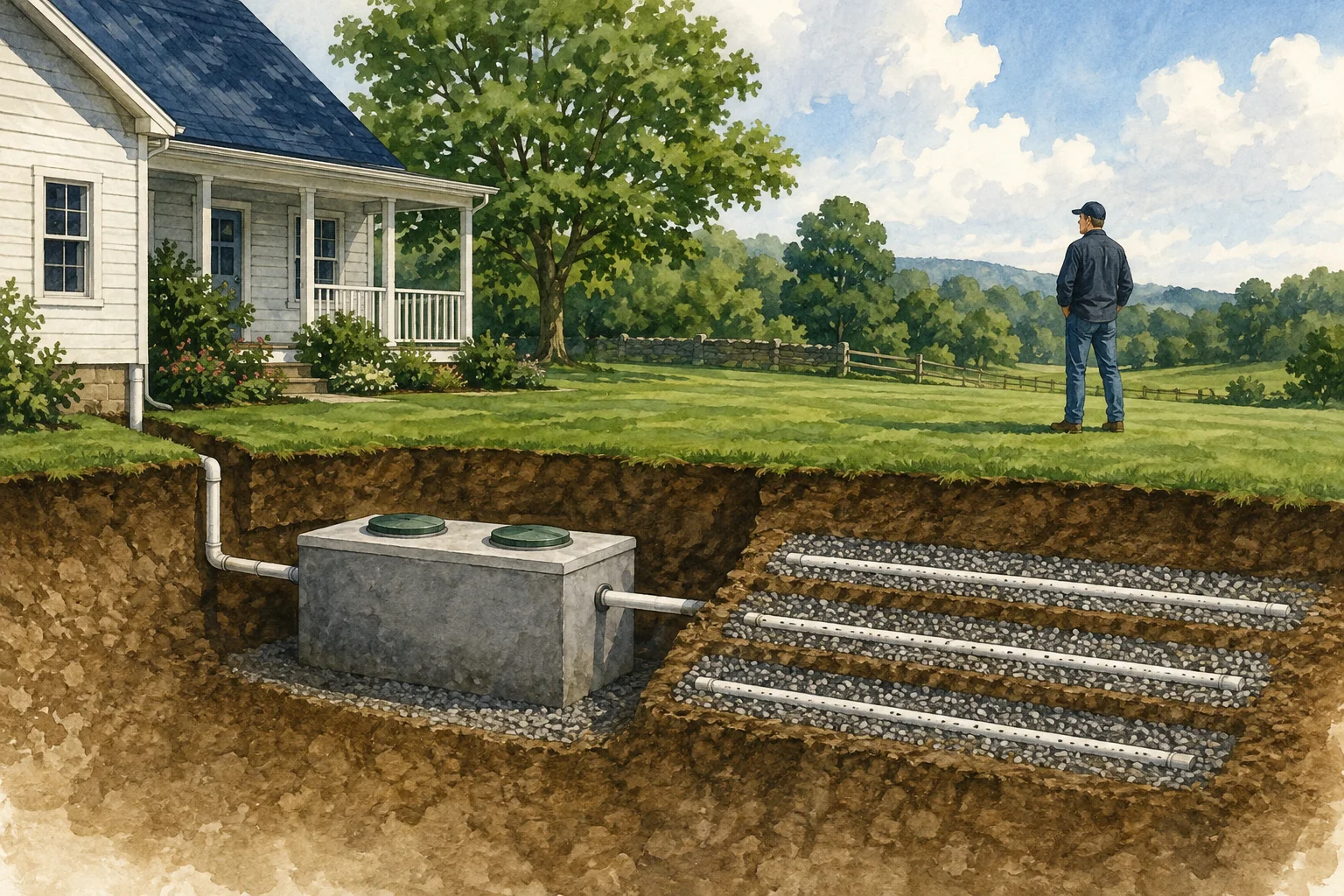
EPA explains that excess water can slow or stop treatment in a drainfield. A high water table also increases backup risk, so ordinary household flow can become too much for temporarily saturated soil.
Why pumping is not an automatic rain fix
EPA warns against pumping a tank while the drainfield area is flooded or the surrounding soil is saturated because the tank may be damaged or shift. Follow current local health-department and septic-professional instructions for the property.
After the ground recovers
If symptoms clear, record the rainfall event and system response. If slow drains, odors, alarms, wet ground, or backups persist after saturation subsides, schedule an inspection that looks beyond tank capacity to pumps, piping, distribution, and drainfield condition.
Sources and review record
- US EPA: Septic Systems: What to Do after the FloodReviewed 2026-09-05
- US EPA: How to Care for Your Septic SystemReviewed 2026-09-05
- US EPA: Resolving Septic System MalfunctionsReviewed 2026-09-05
Keep getting to know your home