 Rural Home Compass
Septic troubleshooting
Septic smell outside: vent condition or drainfield warning?
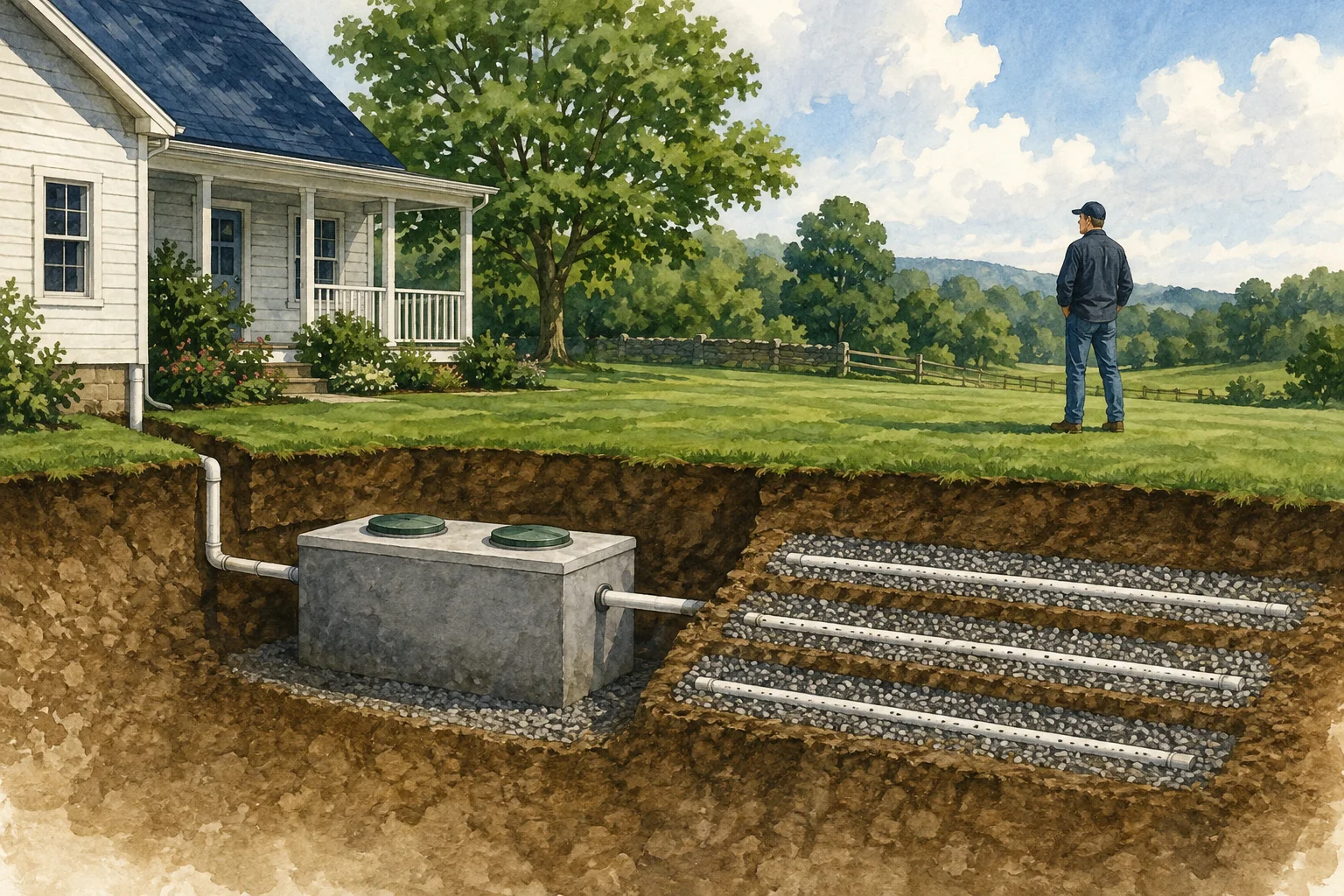
Outdoor septic odor can come from venting and wind conditions, an obstructed or frozen vent, or a malfunctioning drainfield. The important distinction is whether the odor is brief and vent-related or appears with persistent wet soil, unusually lush growth, slow drains, alarms, or surfacing wastewater.
Start here
The short version
- Record whether the smell is near a roof vent, tank, pump area, or drainfield and whether it changes with wind or heavy water use.
- Soft, wet, or spongy soil around the drainfield during otherwise dry weather is a stronger malfunction signal than odor alone.
- Do not open the tank, lean over risers, climb onto a roof, or cover a warning sign with deodorizer.
Locate the pattern from a safe distance
Use the permitted system drawing if available and note the approximate odor area without walking through wet ground. Record wind, recent rain, freezing weather, laundry or guest use, alarms, slow drains, and the last inspection. A brief odor downwind of a vent and a persistent odor over wet soil are not the same observation.
Vent and drainfield explanations require different work
EPA explains that roof or other vent pipes equalize system pressure and that obstruction, freezing, downdrafts, and location-specific wind can cause odor. EPA also identifies a malfunctioning drainfield as another possibility. A qualified provider should assess the relevant system rather than treating odor as proof that pumping alone is needed.
Move from observation to inspection
Schedule septic evaluation when odor persists near the tank or drainfield, especially with alarms, slow fixtures, damp soil, or unusual growth. If wastewater is surfacing, treat it as an exposure hazard: reduce water use, isolate the area from people and pets, and seek prompt professional and local-authority guidance.
Understand the planning factors
What changes your next maintenance step.
Sewage odor outside near the system
EPA says outside odor may involve normal venting and wind conditions, an obstructed vent, or a malfunctioning drainfield; wet ground or wastewater raises the urgency.
Sets at least a due soon result.
BoundaryThe rule selects a service branch; it does not diagnose a failed component.
Sources and review record
- US EPA: Frequent Questions on Septic SystemsReviewed 2026-09-05
- US EPA: Resolving Septic System MalfunctionsReviewed 2026-09-05
Keep getting to know your home