 Rural Home Compass
Well outage
No water from a private well: a safe first-check sequence
No water can begin with a house-wide power or plumbing issue, treatment equipment, pump controls, worn equipment, or a low-yielding well. The safest first step is to narrow the scope without opening live electrical equipment.
Start here
The short version
- Confirm whether every fixture and outbuilding is affected before assuming the well is dry.
- Do not repeatedly reset breakers, open electrical controls, or let a pump run without water.
- Record recent high demand, drought, sputtering, sediment, noises, leaks, and gauge behavior for the well professional.
First: protect people and equipment
If there is flooding, damaged wiring, a burning smell, sparking, or a hot pump or control, stay clear and use the appropriate emergency or electrical professional. Otherwise, stop high-demand water use while you establish the pattern.
Then narrow the outage
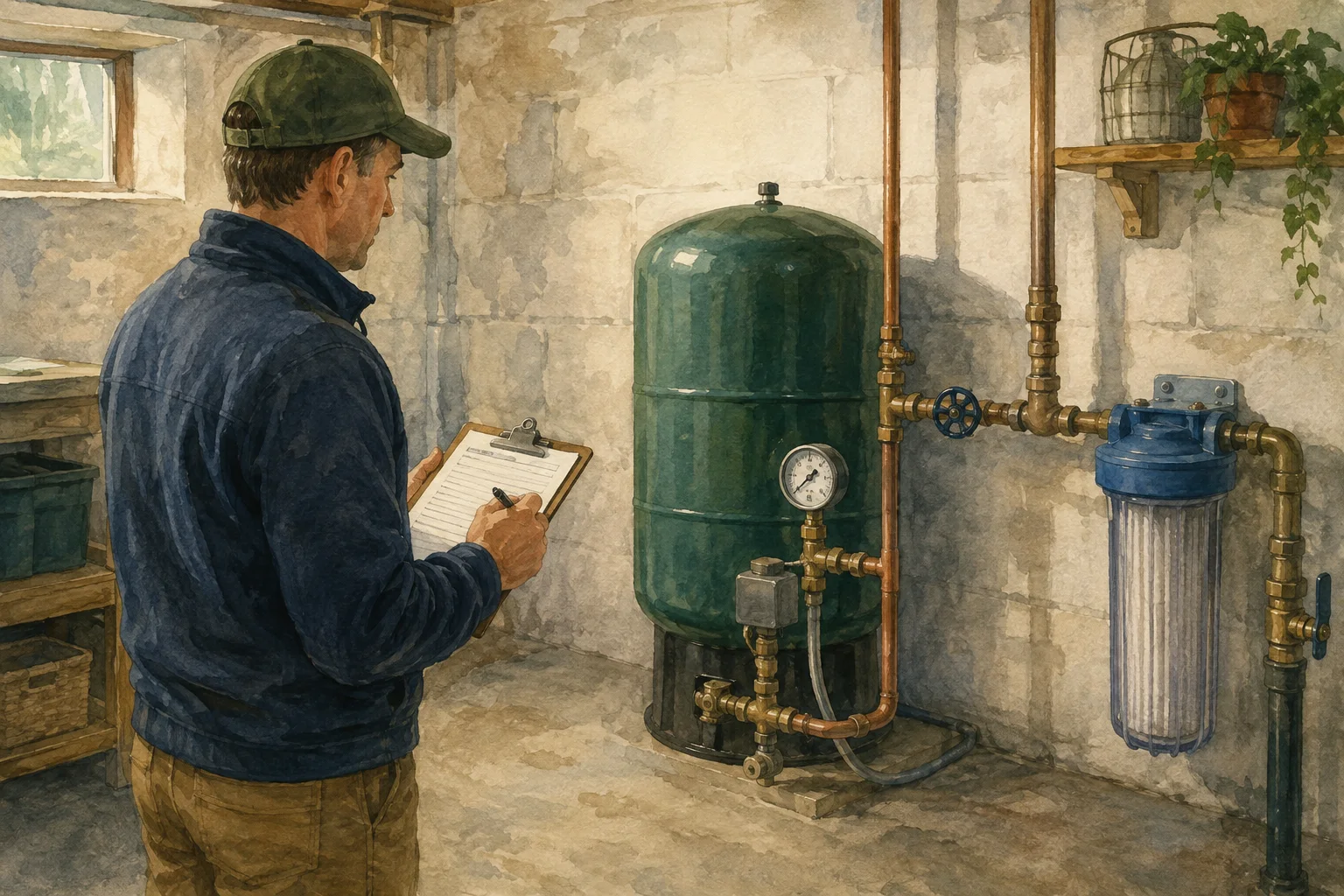
Compare cold-water fixtures, check whether neighbors or outbuildings are affected, and note whether treatment equipment has an alarm or bypass instruction from its manufacturer. From a safe distance, record the pressure gauge reading and whether the pump is silent, continuous, or cycling.
Separate equipment failure from low supply
University extension guidance notes that pressure tanks, pumps, electrical connections, clogged plumbing, and low water levels can all produce loss-of-water symptoms. A licensed well contractor can measure water level and test the pump system; the symptom alone cannot prove a dry well.
Sources and review record
- University of Minnesota Extension: Protecting Your Private Well During DroughtReviewed 2026-09-05
- Penn State Extension: Using Low-Yielding WellsReviewed 2026-09-05
Keep getting to know your home