 Rural Home Compass
Well pressure
Low water pressure from a well: find the pattern before the part
Low pressure is a pattern, not a diagnosis. Whether it affects one fixture, all fixtures, only high-demand periods, or follows filter service changes which system branch deserves attention first.
Start here
The short version
- One weak fixture and a whole-house pressure drop are different problems.
- A clogged filter or treatment restriction can imitate a well or pump problem.
- Pressure that fades during sustained use may require a flow and recovery assessment—not a larger pressure tank by default.
Map where and when it happens
Compare hot and cold flow at more than one fixture. Note whether pressure starts strong then fades, stays weak all day, or drops only when irrigation, laundry, or another large demand runs.
Use safe observations, not live adjustments
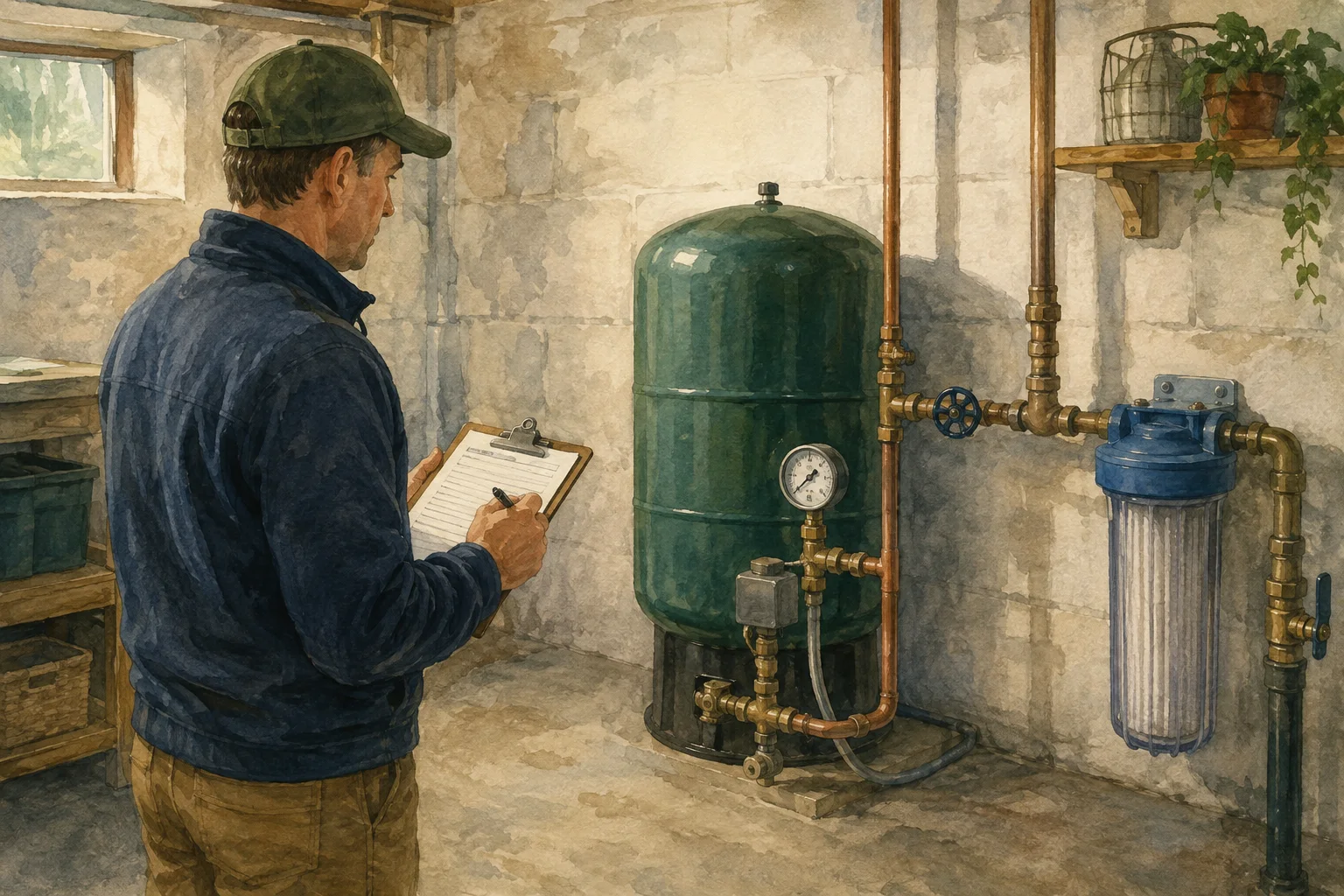
Record the visible pressure gauge behavior, recent filter changes, leaks, sputtering, sediment, and pump sounds. Follow manufacturer instructions for any treatment bypass; do not adjust pressure switches or open energized controls.
Why storage is not always the answer
Penn State explains that a pressure tank mainly maintains system pressure and provides limited drawdown. If the well cannot replenish water at peak demand, a contractor may need to measure yield and recovery before recommending storage, controls, pump work, or well work.
Sources and review record
- Penn State Extension: Using Low-Yielding WellsReviewed 2026-09-05
- Minnesota Department of Health: Well Owner's HandbookReviewed 2026-09-05
Keep getting to know your home