Rural Home Compass
Septic troubleshooting
Slow drains with septic: one fixture or the whole house?
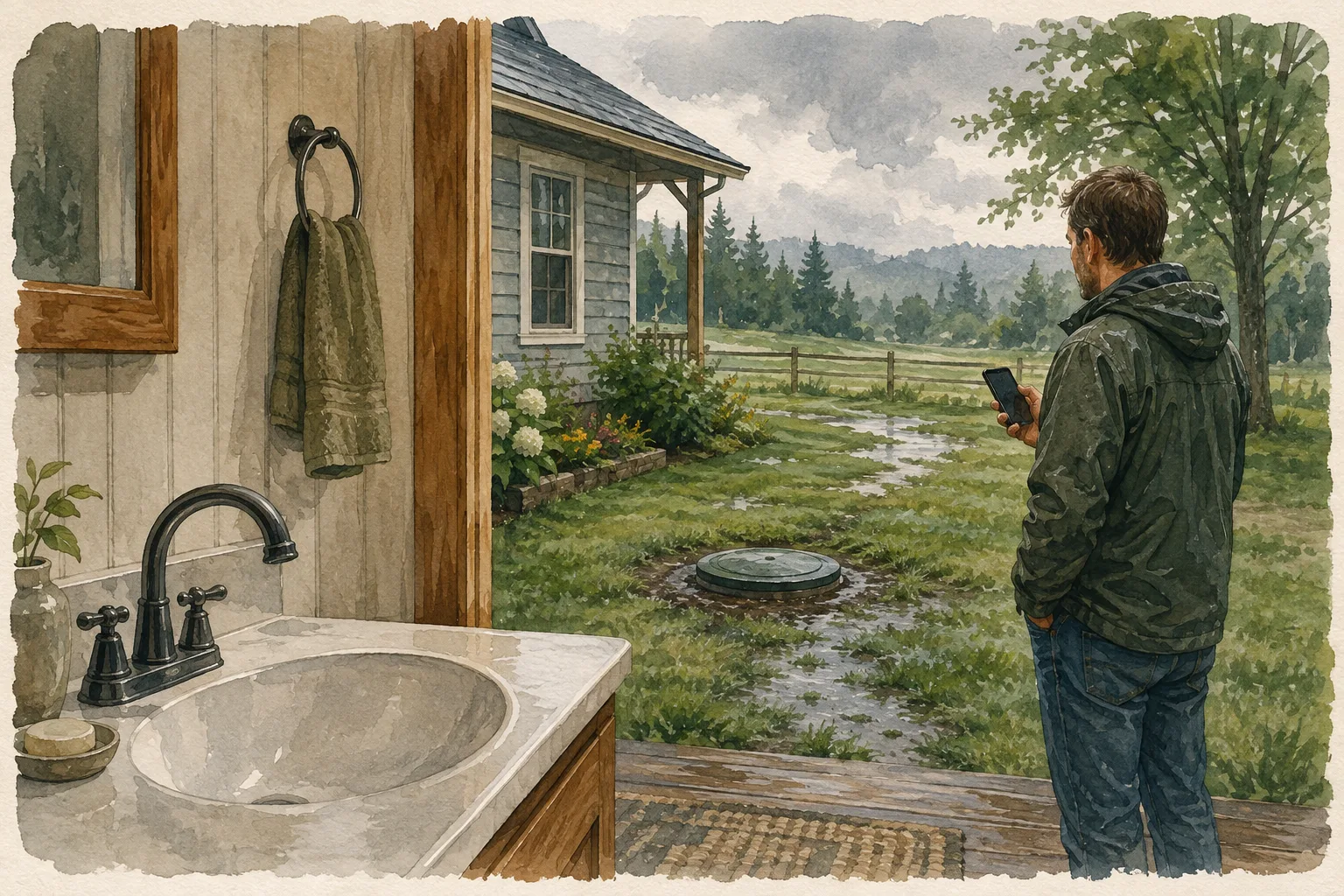
One slow fixture often points toward a local plumbing restriction. Several slow fixtures, gurgling, odor, or wet ground near the drainfield raises concern for a shared drain or septic-system problem.
Start here
The short version
- Compare fixtures before assuming the septic tank is full.
- Reduce water use when several fixtures are affected or symptoms worsen after rain.
- Standing water, sewage odor, surfacing wastewater, or backup needs prompt professional evaluation.
If only one fixture is slow
Check the removable stopper or screen and compare nearby fixtures. Avoid aggressive chemical drain cleaners that can create hazards and do not tell you whether the restriction is local or downstream.
If the whole house is affected
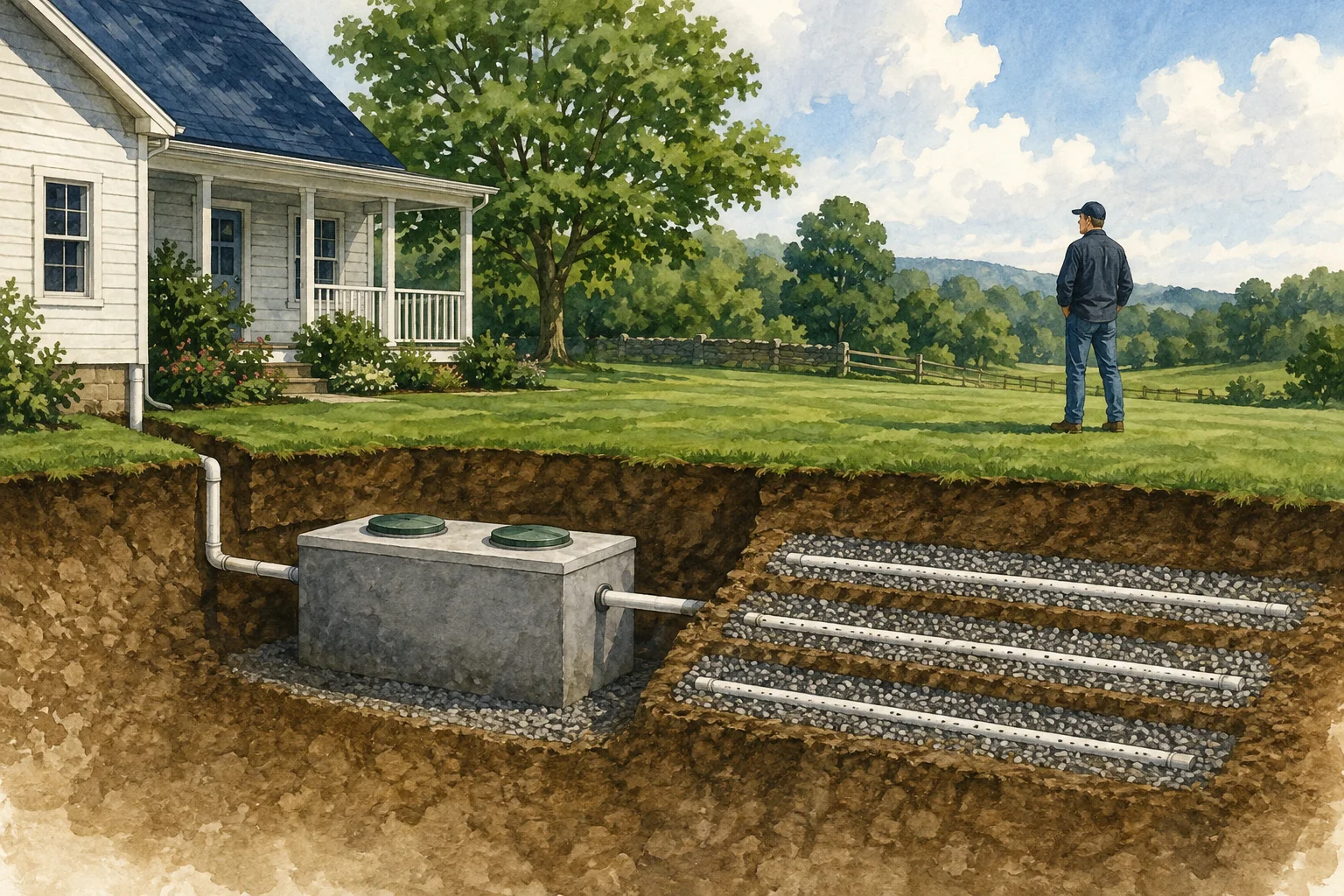
A shared building drain, tank, pump, or drainfield may be involved. Note gurgling, alarms, recent pumping, heavy water use, and whether the drainfield is wet or unusually green.
When to stop troubleshooting
Stop water use and call for help when wastewater backs up or surfaces outdoors. EPA identifies slow drains, gurgling, standing water, odors, and unusually lush grass among common malfunction signs.
Sources and review record
- US EPA: Resolving Septic System MalfunctionsReviewed 2026-09-05
Keep getting to know your home