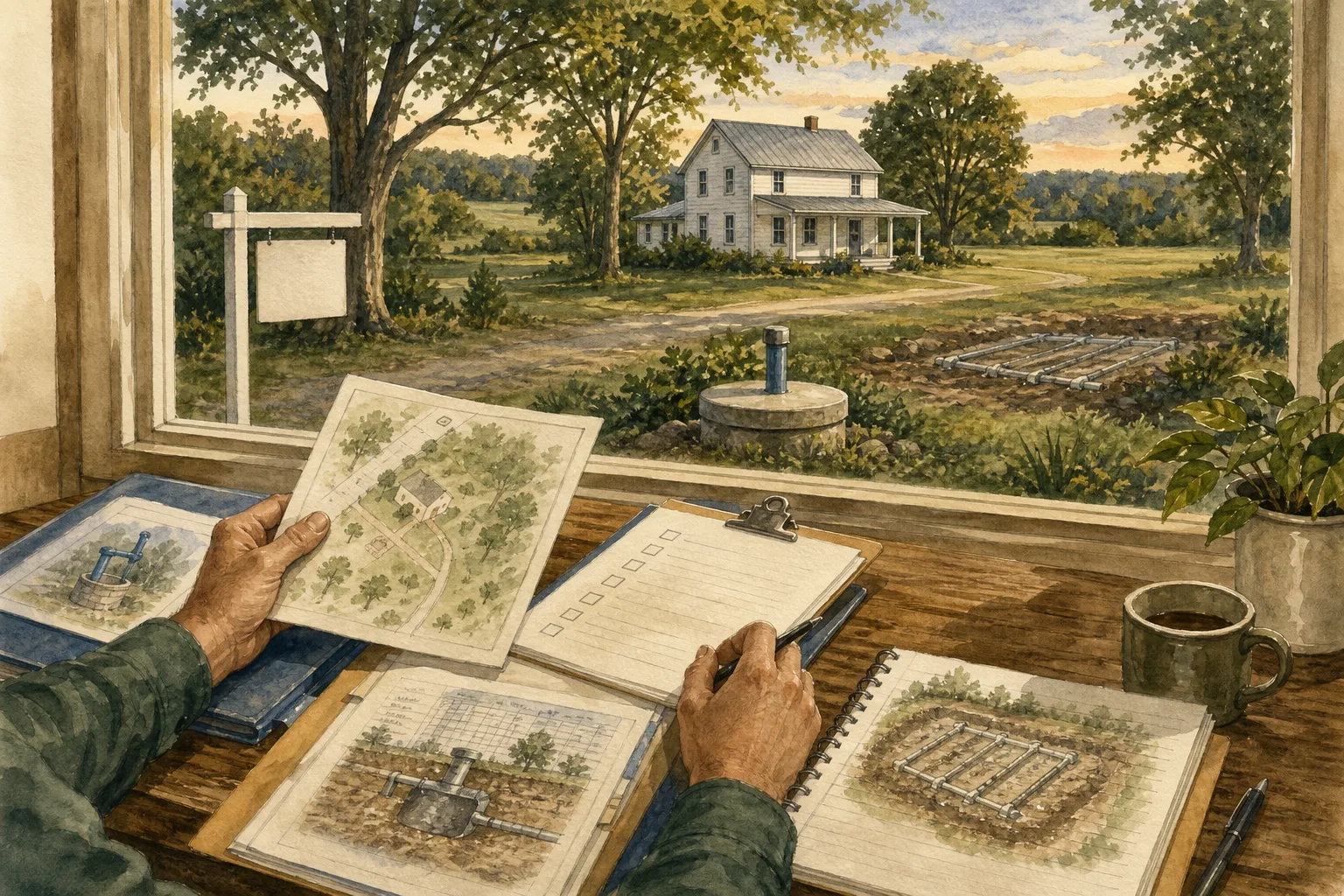
Rural Home Compass
New homeowner plan
Your first 30 days in a rural home
The first month is about replacing unknowns with records, safe observations, and professional evidence—before an outage, odor, backup, or storm forces the issue.
Start here
The short version
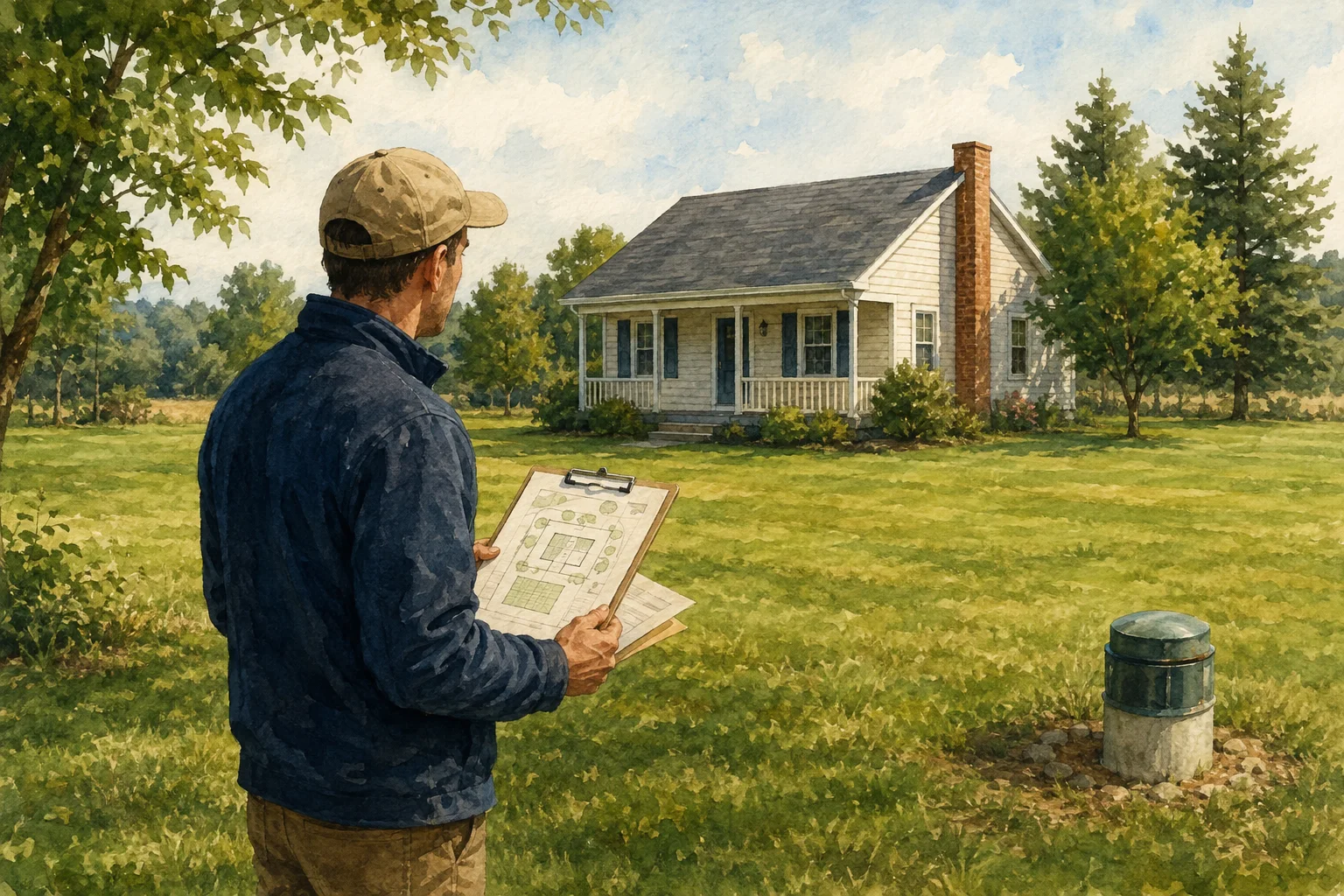
- Locate and photograph the wellhead, shutoff, pressure tank, septic tank, drainfield, alarms, and control panels.
- Establish a current laboratory water baseline.
- Collect permits, layouts, service history, manuals, and trusted local contacts.
Days 1–3: map the systems
Locate visible components without opening tanks, electrical controls, or confined spaces. Label the main water shutoff and keep vehicles, sheds, and heavy traffic off the drainfield.
Week 1: collect evidence
Ask the seller, county or local authority, previous providers, and closing file for well and septic records. Record unknowns instead of inventing dates.
Weeks 2–4: test and schedule
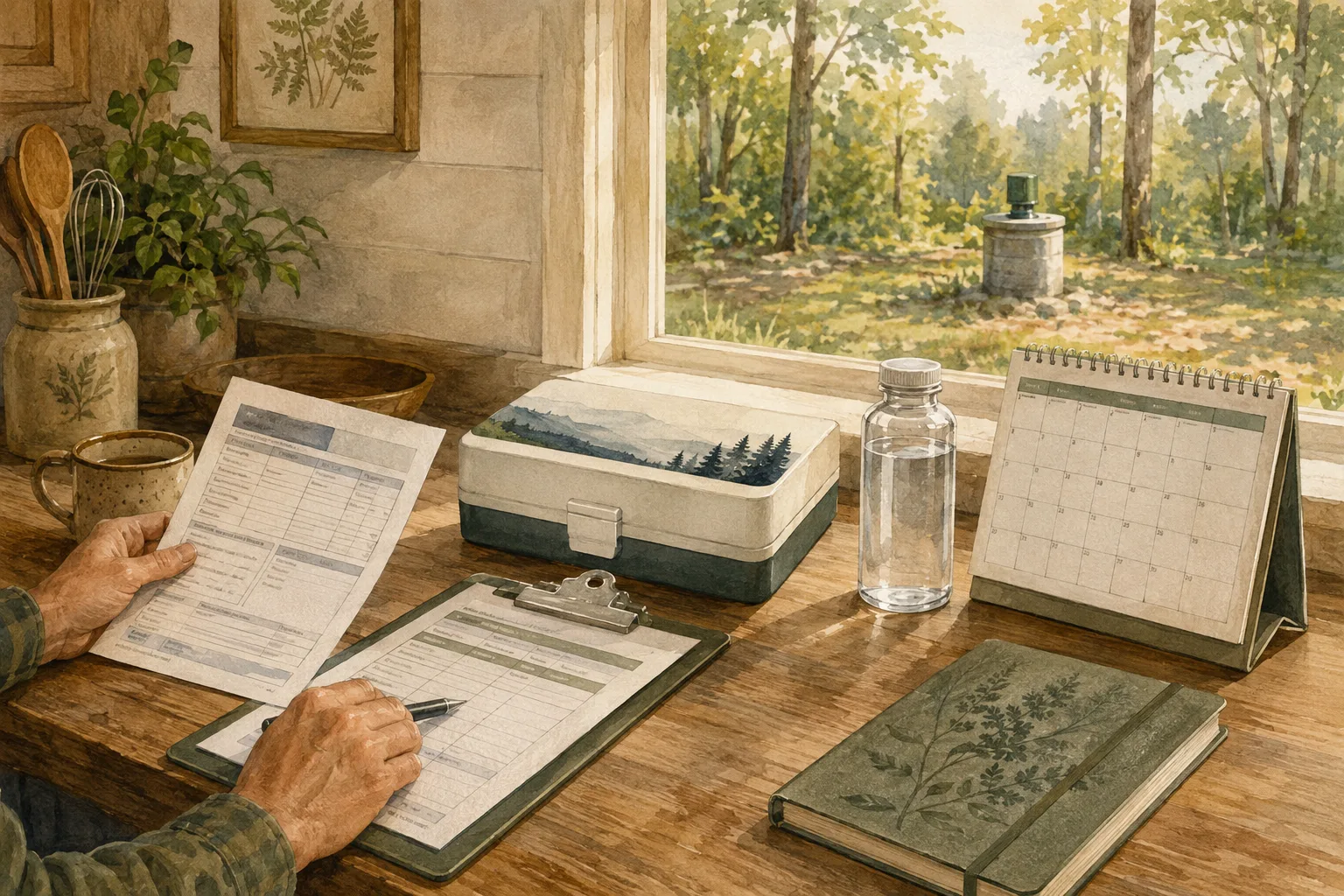
Complete the locally appropriate well-water tests, review septic inspection or pumping need, and set reminders based on verified service dates and system type.
Sources and review record
- US EPA: Protect Your Home's WaterReviewed 2026-09-05
- CDC: Guidelines for Testing Well WaterReviewed 2026-09-05
- US EPA: How to Care for Your Septic SystemReviewed 2026-09-05
Keep getting to know your home