 Rural Home Compass
VA homeowner guide
Virginia: private well + septic
Virginia makes the ownership split unusually clear: a new well receives construction-related bacteriological testing, ongoing water quality becomes the owner’s responsibility, and septic permits can reveal design capacity and continuing duties that matter before a purchase.
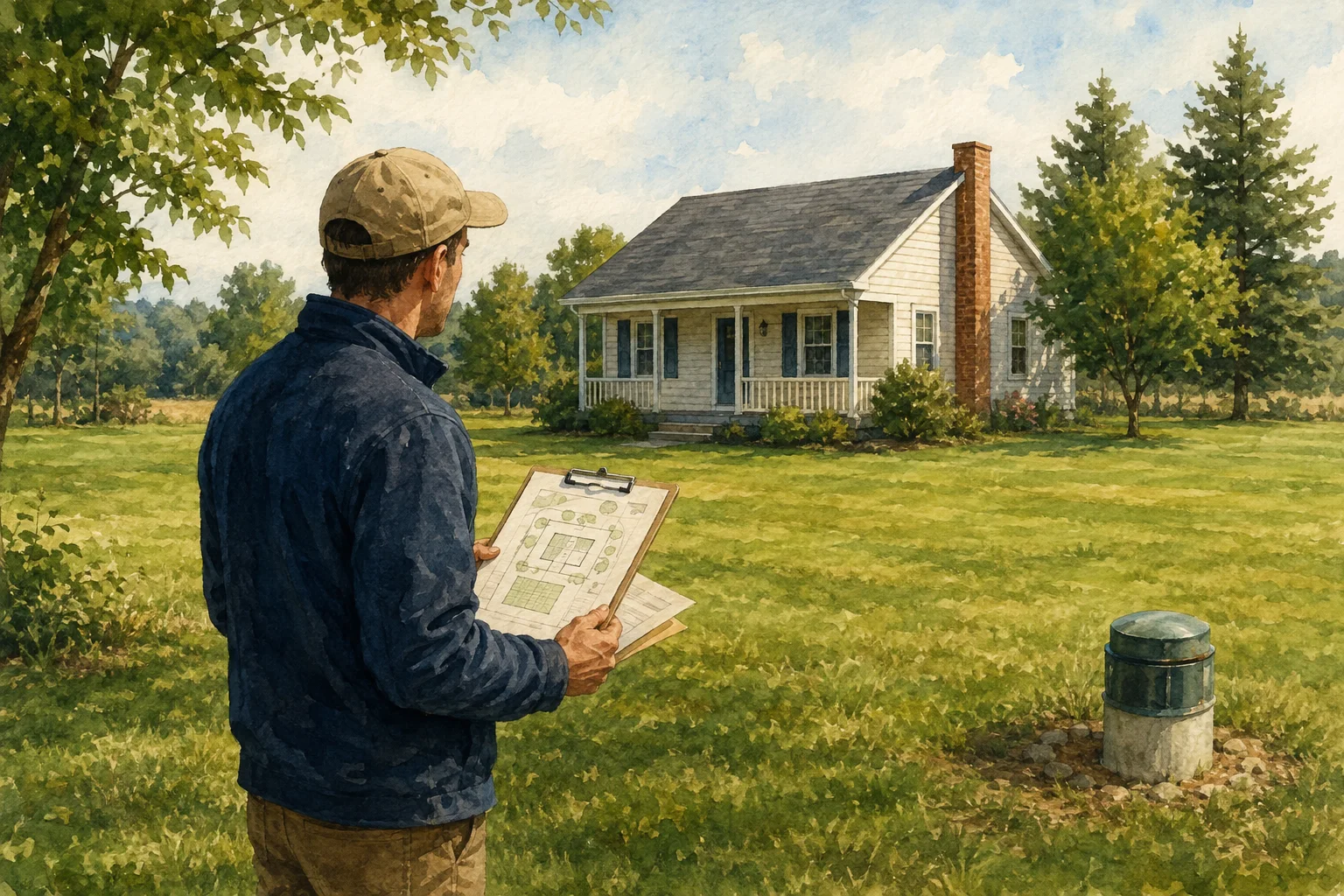
Virginia-specific value comes from its post-construction owner responsibility, annual bacteria/nitrate recommendation, permit-level design capacity, and annual licensed-operator duty for alternative systems.
VDH recommends annual bacteria and nitrate testing after a broader baseline, plus additional testing after flooding, quality changes, or a credible local contaminant concern.
Conventional systems use a three-to-five-year pumping planning range; alternative systems generally require at least annual visits by a licensed operator.
Virginia Department of Health regulations frame construction and onsite systems, while the local health department is the starting point for permits, records, and property-specific requirements.
Request the construction permit, operation permit, as-built drawing, inspection reports, maintenance manual, and enforcement history from the local health department.
Private well facts that change your next step
- Newly constructed Virginia private wells must receive bacteriological testing, but ongoing testing after installation is generally the well owner’s responsibility.
- VDH recommends annual testing for bacteria and nitrate, with a broader baseline that includes indicators, metals, minerals, and radiological constituents relevant in Virginia.
- For a home purchase, VDH suggests testing even though the department does not itself require water-quality testing as part of every property transfer.
Septic facts that change your next step
- The septic permit and operation permit can identify system components, design capacity, ongoing conditions, and whether an alternative system requires continuing operator visits.
- VDH recommends conventional systems be pumped every three to five years depending on use; some Chesapeake Bay Preservation Area properties have additional pump-out requirements.
- Alternative onsite sewage systems must generally be visited at least annually by a licensed operator, and their operation and maintenance records matter at transfer.
- Request the complete well and onsite-system file from the local health department.
- Compare septic design bedroom capacity and permit conditions with the household’s intended use.
- Establish a current bacteria and nitrate result, then add tests based on the VDH baseline and local risks.
Official state sources
- Virginia Department of Health: Private Well ProgramReviewed 2026-09-05
- Virginia Department of Health: Buying a House with an Onsite SystemReviewed 2026-09-05
- Virginia Department of Health: Division of Onsite Water and Wastewater ServicesReviewed 2026-09-05