 Rural Home Compass
NC homeowner guide
North Carolina: private well + septic
North Carolina has unusually actionable statewide guidance: new private wells require testing tied to completion, existing-well owners receive a tiered testing schedule, and local health departments are central to both well and septic records.
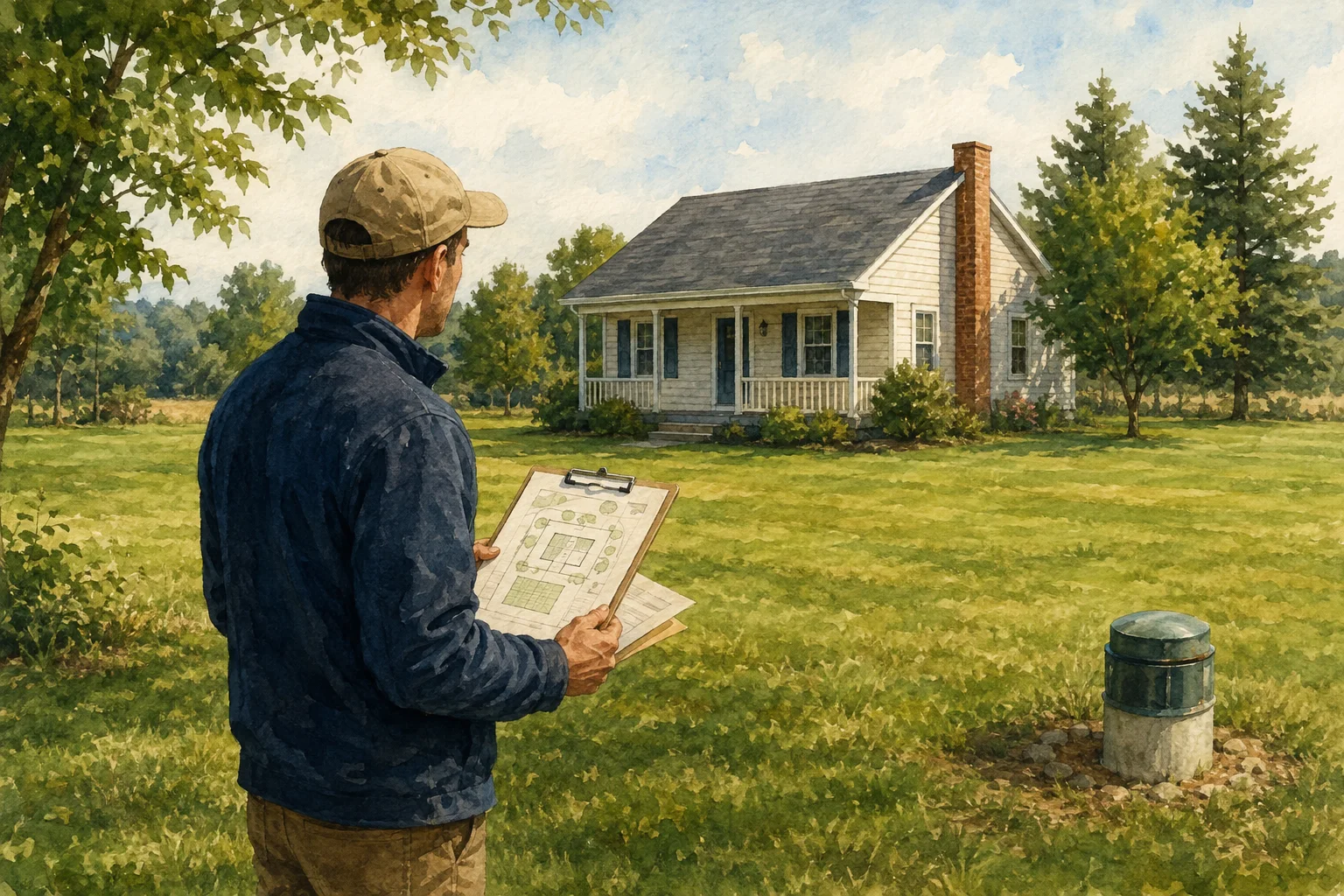
New-well testing requirement, NC-specific tiered testing cadence, county health-department record flow, and state-certified septic roles.
North Carolina separates new-well completion testing, recurring homeowner testing, and event-driven retesting; the dedicated testing guide explains the exact timing and panels.
Most tanks are described on a three-to-five-year pumping range, while permit conditions, system type, operators, and measured solids control the real date.
County environmental health programs are the practical authority for private-well and onsite-wastewater permits, records, inspections, and local requirements.
Ask the county environmental health program for well and septic permits, layouts, completion records, and operator requirements.
Private well testing overview
North Carolina uses different testing paths for different moments.
New-well completion, routine ownership, a home purchase, and a flood or repair are not the same testing decision. Use the dedicated guide for the exact timing, required parameters, laboratory route, and county records to request.
Open the North Carolina private-well testing guide →Septic facts that change your next step
- The local health department is the practical first stop for a septic permit and system layout.
- North Carolina homeowner guidance says most tanks should be pumped every three to five years, while the permit, system type, measured solids, and service professional control the actual timing.
- State-certified installers, inspectors, and—where required—subsurface system operators have different roles.
- Ask the county environmental health program for the well and septic records.
- Use the North Carolina testing schedule to identify missing laboratory history.
- Record septic type, permit conditions, pump/inspection dates, and whether the system requires an operator.
Official state sources
- North Carolina DHHS: Private Well Water Testing FAQsReviewed 2026-09-07
- North Carolina General Assembly: G.S. 87-97: Permitting and testing of private drinking water wellsReviewed 2026-09-07
- North Carolina Department of Environmental Quality: 15A NCAC 02C private drinking water well rulesReviewed 2026-09-07
- North Carolina Division of Public Health: Private Wells Program and county contactsReviewed 2026-09-07
- North Carolina Division of Public Health: Ensuring Water Safety after Hurricane HeleneReviewed 2026-09-07
- North Carolina Division of Public Health: NC Homeowners: Caring for Your Septic SystemReviewed 2026-09-05
- North Carolina Division of Public Health: On-Site Water Protection BranchReviewed 2026-09-05