 Rural Home Compass
New York homeowner guide · Private well water
When should you test a private well in New York?
New York uses several different testing decisions: a recommended initial panel before a new well enters household use, annual bacteria testing, a broader three-to-five-year schedule, and immediate escalation after flooding or suspected chemical contamination. PFAS testing depends on local evidence and current program eligibility rather than one universal statewide package.
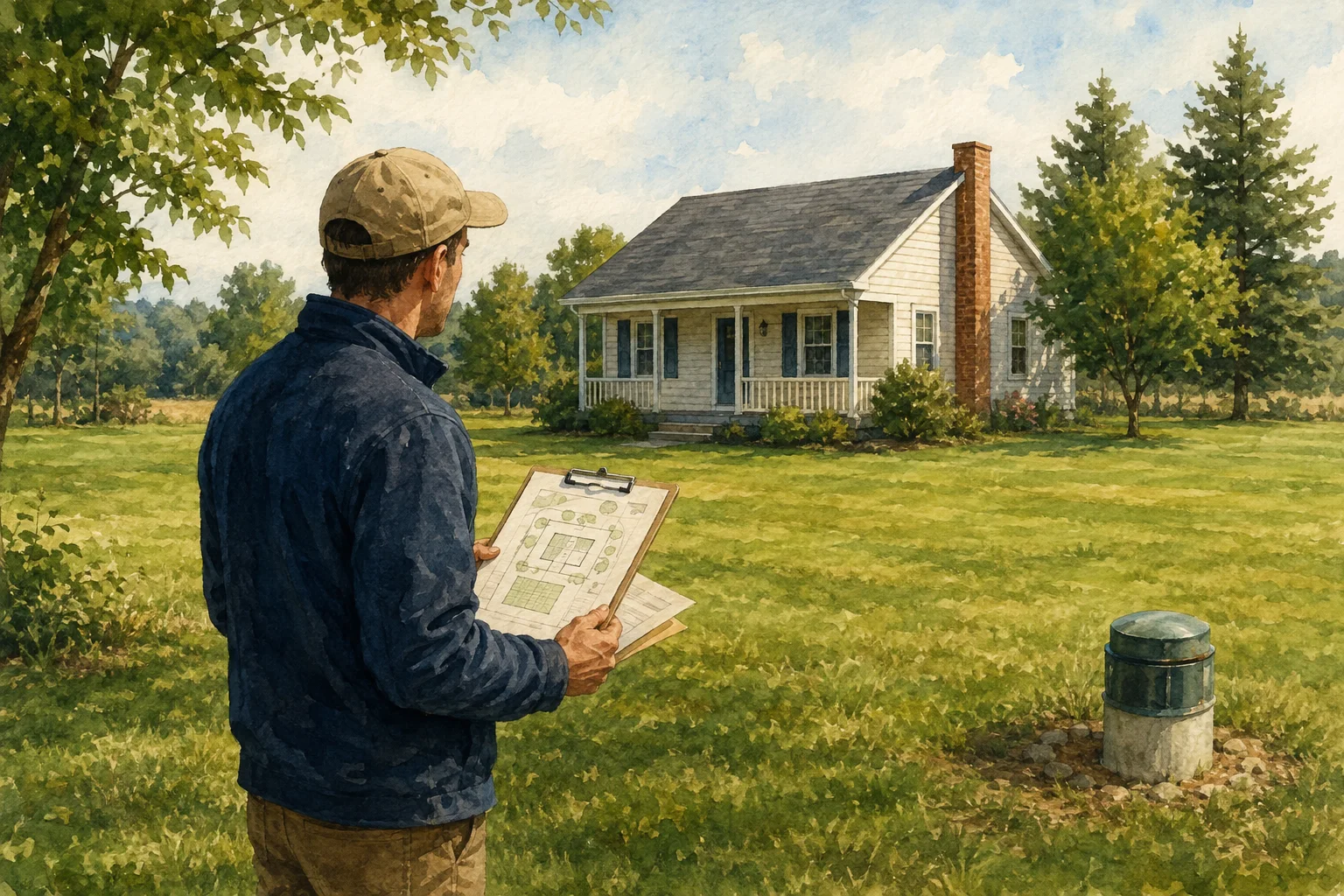
This plan connects New York’s recommended 15-item new-well panel and annual/three-to-five-year schedule to the state’s stop-use rule for suspected oil or chemical contamination, its specialized PFAS pathway, and DEC completion-report records whose geographic coverage and verification limits must be understood.
Four different decisions
Start with why you are testing.
New well
Use New York’s recommended initial panel before household use.
New York State Department of Health recommends testing a new individual residential well after proper installation and development and before homeowner use. The state fact sheet supplies a broad starting panel, while the local health department can add required analyses or procedures.
- Ask the local health department whether it has a required new-well testing schedule before arranging the sample.
- Use an ELAP-certified potable-water laboratory and keep the full report with the DEC Water Well Completion Report.
Official guidanceIndividual Water Supply Wells — Recommended Residential Water Quality TestingIndividual Water Supply Wells — Fact Sheet #7 Checklist
Buying a home
Separate the construction record from current water quality.
A DEC Water Well Completion Report can describe construction, location, depth, yield, and pump details, but DEC says much of the report data is not verified and it does not replace current water testing. New York also directs owners to ask the local health department about local testing requirements and concerns.
- Request the seller’s completion report and laboratory history, then search the available DEC completion-report systems.
- Confirm county requirements and establish a current ELAP laboratory baseline when the existing results do not answer the household’s intended use.
Official guidanceIndividual Water Supply Wells — Recommended Residential Water Quality TestingWater Well Contractor Program and Completion Report RecordsCounty Health Department Contacts
Routine care
Keep one annual date and one three-to-five-year review date.
New York recommends testing tap water at least annually for E. coli and coliform bacteria and every three to five years for the broader group listed in its homeowner schedule. Local geology, nearby activities, plumbing, treatment equipment, and household changes can justify additions or earlier testing.
- Track annual bacteria results separately from the broader three-to-five-year panel.
- Review the panel with the laboratory or local health department when local risks, plumbing, treatment, or household needs change.
Official guidanceTest Your Well: Protect Your Family's WaterIndividual Water Supply Wells — Recommended Residential Water Quality Testing
Flood or repair
Do not reuse an old routine result after the event.
After flooding, New York directs private-well owners to stop using the water for drinking and cooking, assess and repair the well, flush and disinfect it, and obtain a post-restoration bacteria sample from a New York certified laboratory. Suspected gasoline, heating-oil, or other chemical contamination requires a different stop-use and agency response.
- Use an alternate water source and contact the local health department before restoring the well to service.
- If oil or chemicals may be involved, do not rely on boiling or disinfection; contact the local health department and DEC Spill Hotline immediately.
Official guidancePrivate WellsRestoring and Testing Your Private Well After a Flood
New wells and regulated work
Start with the state-recommended panel.
New York recommends a specific starting panel for newly constructed private drinking-water wells. Local health departments may set their own required analyses and procedures. This list is separate from the routine homeowner schedule.
- Arsenic
- Chloride
- Coliform bacteria
- Lead
- Nitrate
- Nitrite
- Iron
- Manganese
- Iron plus manganese
- Turbidity
- Sulfate
- pH
- Hardness
- Alkalinity
- Sodium
The responsible professional and certified laboratory determine the accepted sample and report. Do not assume a retail package satisfies a regulatory purpose.
Official basis for the new-well panelIndividual Water Supply Wells — Recommended Residential Water Quality TestingIndividual Water Supply Wells — Fact Sheet #7 Checklist
Existing wells
New York has a state-specific recurring schedule.
New York describes late spring or early summer as the preferred routine testing period and directs owners to obtain instructions and bottles from the laboratory.
Official guidanceTest Your Well: Protect Your Family's Water
These health-related constituents are part of the state’s broader recurring homeowner schedule; local findings or household vulnerability can justify earlier testing.
Official guidanceTest Your Well: Protect Your Family's WaterIndividual Water Supply Wells — Recommended Residential Water Quality Testing
These condition, corrosion, and treatment-related measures share the state’s broader recurring schedule, but changes in water or treatment performance can trigger earlier testing.
Official guidanceTest Your Well: Protect Your Family's WaterIndividual Water Supply Wells — Recommended Residential Water Quality Testing
The calendar is not the whole answer
When should the panel change?
A change in taste, odor, color, or clarity
Test when water changes rather than waiting for the next calendar date; use the observed change to select credible laboratory analyses without treating appearance as a safety diagnosis.
Official guidancePrivate WellsTest Your Well: Protect Your Family's WaterIndividual Water Supply Wells — Recommended Residential Water Quality Testing
Pregnancy, a new baby, or a household health change
Review the panel with the local health department or laboratory because New York specifically identifies household and health changes as reasons to consider additional testing.
Official guidanceTest Your Well: Protect Your Family's Water
Flooding, well maintenance, modification, or repair
Arrange event-specific testing after the well is restored; post-flood guidance calls for a bacteria sample from a New York certified laboratory and continued alternate water until results support reuse.
Official guidancePrivate WellsIndividual Water Supply Wells — Fact Sheet #7 ChecklistRestoring and Testing Your Private Well After a Flood
Nearby agriculture, fuel storage, landfill, industry, mining, gas activity, or older/corrosive plumbing
Use the state’s source-to-analyte table and local evidence to choose tests such as nitrate, pesticides, arsenic, VOCs, metals, lead, copper, chloride, barium, or other credible regional constituents.
Official guidanceIndividual Water Supply Wells — Recommended Residential Water Quality Testing
Suspected gasoline, heating oil, or other chemical contamination
Stop using the water, use bottled water for drinking and food preparation, and immediately contact the local health department and DEC Spill Hotline. Boiling or disinfecting does not remove oil and other chemicals.
Official guidancePrivate WellsRestoring and Testing Your Private Well After a Flood
PFAS concern or a nearby known contamination source
Contact the local health department or NYSDOH Bureau of Environmental Exposure Investigation before ordering a test. PFAS are not regulated in private wells; New York uses public-water standards as guidance, specialized certified laboratories are required, and the current free-testing/rebate pilot is limited to eligible applicants in six named counties when applications are being accepted.
Official guidancePFAS and Private WellsPrivate Well PFAS Testing and Mitigation Rebate Pilot Program
Laboratory and sampling
Confirm the route before collecting water.
Use a laboratory certified by the New York State Department of Health Environmental Laboratory Approval Program for potable water and confirm that its current scope covers each requested analyte or method.
Official guidanceIndividual Water Supply Wells — Recommended Residential Water Quality TestingSearch New York Accredited Environmental Laboratories
Obtain bottles and collection instructions from the laboratory before sampling. Lead, coliform, and PFAS can require specific collection procedures; the laboratory or local health department should define the accepted sample.
Official guidanceTest Your Well: Protect Your Family's WaterIndividual Water Supply Wells — Recommended Residential Water Quality TestingPFAS and Private Wells
Do not assume an in-home vendor test or retail kit meets ELAP standards or a local regulatory purpose. Confirm the local health department’s required analyses, sample collector, timing, and interpretation process.
Official guidanceIndividual Water Supply Wells — Recommended Residential Water Quality TestingIndividual Water Supply Wells — Fact Sheet #7 Checklist
Official records
Start with the official well-record system.
New York State DEC’s Water Well Contractor Program and the local health department serving the property.
DECinfo Locator includes completion-report records for upstate and Long Island counties, including Nassau, Suffolk, Kings, and Queens, while the Open Data and Water Well Information Search options are identified as upstate-only. DEC warns that basic completion-report information is generally not verified, so reconcile it with the owner’s report, local files, and current testing.
Open the official well-record entry point ↗Records and lookup guidanceWater Well Contractor Program and Completion Report RecordsCounty Health Department Contacts
- DEC Water Well Completion Report and well number
- Well location, construction, depth, yield, and pump details
- Local health department approvals or required analyses
- Prior ELAP laboratory reports and treatment records
Turn the schedule into questions
Build a starting water-test panel.
The recommender combines your current issue, purchase status, flood or repair history, nearby agriculture, vulnerable occupants, and ZIP-based New York context. It does not replace the responsible professional or laboratory.
Open the Well Water Test Recommender →Official sources
These sources were reviewed for this page on 2026-09-07. A build date does not refresh that review.
- New York State Department of Health: Private WellsReviewed 2026-09-07
- New York State Department of Health: Test Your Well: Protect Your Family's WaterReviewed 2026-09-07
- New York State Department of Health: Individual Water Supply Wells — Recommended Residential Water Quality TestingReviewed 2026-09-07
- New York State Department of Health: Individual Water Supply Wells — Fact Sheet #7 ChecklistReviewed 2026-09-07
- New York State Department of Health: Restoring and Testing Your Private Well After a FloodReviewed 2026-09-07
- New York State Department of Health: PFAS and Private WellsReviewed 2026-09-07
- New York State Department of Health: Private Well PFAS Testing and Mitigation Rebate Pilot ProgramReviewed 2026-09-07
- New York State Department of Health: Search New York Accredited Environmental LaboratoriesReviewed 2026-09-07
- New York State Department of Environmental Conservation: Water Well Contractor Program and Completion Report RecordsReviewed 2026-09-07
- New York State Department of Health: County Health Department ContactsReviewed 2026-09-07