Rural Home Compass
Home buying
Septic inspection for home buyers: evidence to get before closing
A pump receipt is not a full septic inspection. Before closing, establish the permitted design, maintenance history, system condition, and the limits of what the inspector was able to observe or test.

Start here
The short version
- Request the permit, as-built drawing, system type, design capacity, age, and repair history.
- Confirm that the inspection scope covers accessible tanks, levels, baffles, piping, pumps, controls, distribution, and drainfield observations as applicable.
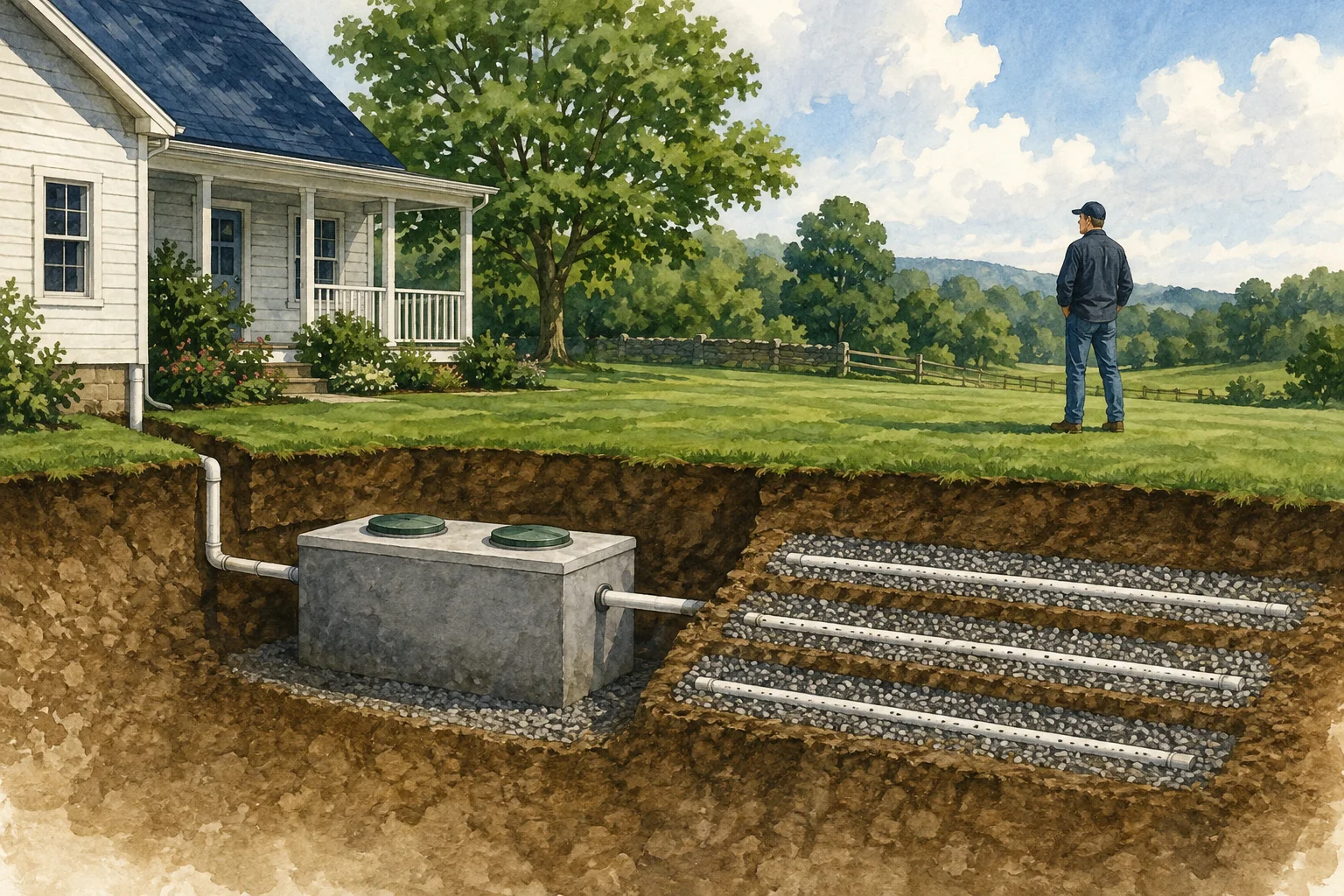
- Ask which components were not located, opened, tested, or verified and what local transfer rules require.
Start with the record trail
EPA says the local permitting authority often holds septic permits and the as-built design. Compare those records with seller disclosures, pumping invoices, maintenance contracts, alarm history, and visible component locations.
Define the inspection before paying for it
EPA describes inspection work that can include records review, opening tanks, evaluating sludge and scum, checking for leakage or backup evidence, and examining component integrity. Actual scope varies by system type, access, weather, jurisdiction, and provider.
Turn unknowns into a closing decision
The written report should distinguish observed condition from unverified assumptions. Unlocated components, saturated ground, inaccessible lids, missing permits, or an untested pump are unresolved risks to price, contingency, specialist review, or future budgeting.
Sources and review record
- US EPA: New Homebuyer's Guide to Septic SystemsReviewed 2026-09-05
- US EPA: Frequent Questions on Septic SystemsReviewed 2026-09-05
Keep getting to know your home